Creatine Monohydrate vs HCl: What’s the Difference and Which One Should You Take?

One of the best supplements someone who hits the gym regularly can add to their routine is creatine. Whether you’re trying to get bigger, stronger, or just get more out of your workouts, creatine can help by giving your muscles the energy they need to perform during high-intensity exercise sessions. This can help you push harder in your workouts, bounce back quickly during tough sessions, and support your progress over time.
Even though the benefits of creatine are pretty well established, picking out a supplement can be a real puzzle. You go into a store or browse online, and you’ll see all these different types of creatine, each with its own claims about how well they absorb, how well they dissolve and how effective they are. So how do you figure out which form of creatine is most effective?
The Different Types of Creatine
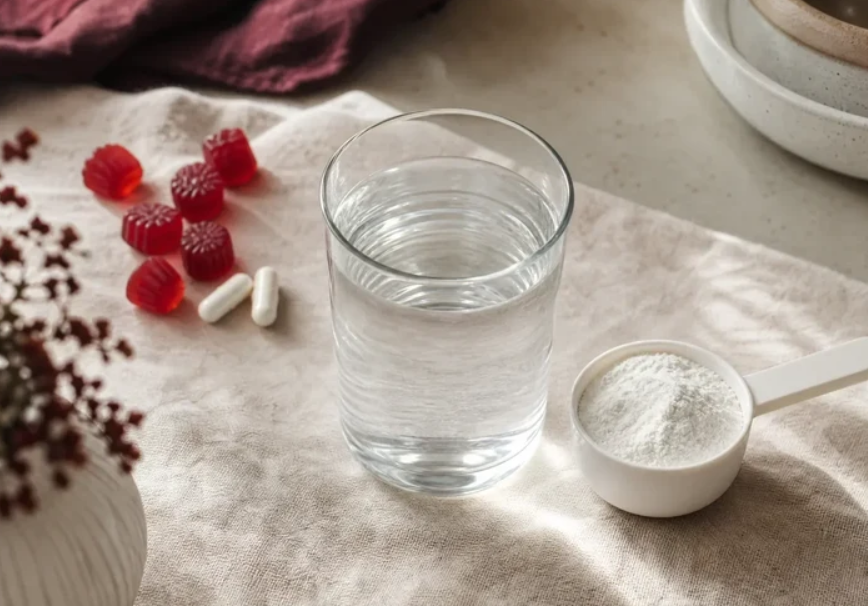
There are several kinds of creatine out there, but the two that get the most talk are easily digestible creatine monohydrate and creatine hydrochloride (HCl). Both are supposed to get creatine into your system, but they go about it in pretty different ways, with different chemical structures, solubility levels and the amount of solid research backing them up. Knowing the ins and outs of those differences makes it a whole lot easier to pick the one that fits your workout routine.
The Creatine Monohydrate
Creatine monohydrate is probably the most well-known form of creatine, and that’s no surprise. Decades’ worth of research has been put into it, and it’s up there as one of the most studied sports supplements. Essentially, it’s just a combination of creatine and the molecule called monohydrate, and its main job is to deliver more creatine to your muscles, just like all the other forms do.
One of the best things about monohydrate creatine is the sheer amount of research that’s gone into it. Loads of studies have shown that taking it regularly can seriously boost strength, power and overall performance when you’re doing high-intensity exercise. And if you combine it with some resistance training, it can even give you a bit more muscle mass over time. So with all that research backing it up, it’s easy to get a pretty clear idea of what you can expect from it.
Another big plus point is that monohydrate creatine is pretty straightforward. You can pick it up easily; it’s generally not too pricey and can be easily slotted into your daily routine. A typical serving is about 3-5 grams of creatine, and you can take it pretty much whenever (not just before or after a workout). Plus, there’s no need to go for some complicated formula or blend – it’s just creatine, plain and simple.
However, like all things, monohydrate creatine does have a few downsides. One common one is its solubility – it’s not as easy to mix into a drink as some other types like HCl. It won’t make it less effective, but you might notice some of the powder settling at the bottom of your glass if you don’t mix it well enough.
Some people also notice their weight goes up a bit after they start taking creatine. But it’s actually just extra water stored in the muscles, not an increase in body fat. This can be a bit confusing if you’re one of those people who likes to keep an eye on the scales.
All in all, the main appeal of monohydrate creatine is pretty simple – it’s been well researched, easy to get hold of, and has been around for a long time. Sure, its solubility might be a tiny bit annoying, but honestly, the evidence for how well it works is a lot stronger than it is for a lot of newer types of creatine.
Creatine Hydrochloride (HCl)
HCl is another version of creatine that’s been getting a lot of attention as an alternative to good old monohydrate. Instead of being paired up with a water molecule, here creatine is hooked up with a bit of hydrochloride, which changes a few of its physical characteristics. One of the main differences you’ll notice is how easily it dissolves in water: creatine HCl just melts in there much more readily than monohydrate does.
That increased solubility is one of the main reasons HCl is being touted as an alternative to monohydrate. You can often use a bit less of HCl in a product, which makes the serving size look more appealing to people who don’t want to be downing several grams of powder each day. It’s also a lot easier to mix into your drink, without that grainy texture or settling that some people don’t like about monohydrate creatine.
Some people swear by HCl being more comfortable to take because it doesn’t cause the temporary water retention or the stomach discomfort that some people get with monohydrate. In particular, taking larger amounts of monohydrate can be a real problem for some folks. However ( and this is a big ‘however’), individual experiences can vary all over the shop, and there just isn’t a clear indication that HCl is consistently any better in this regard.
The big limitation when you’re comparing HCl to monohydrate is the amount of research that’s been done on it. Now HCl has been looked at, but it doesn’t have the wealth of evidence that backs up the benefits for strength, muscle growth and exercise performance that we have for monohydrate. And importantly, just because it dissolves in water more easily doesn’t automatically mean it’s more effective. The fact that HCl turns into a liquid in water doesn’t necessarily mean that your body uses it any differently or that it’ll give you better results from your workouts.
And then there’s cost – which is another thing to consider. HCl products can be pretty pricey, which might have something to do with monohydrate being such a well-established ingredient.
So at the end of the day, the main appeal of creatine HCl is probably just convenience and formulation. It dissolves easily, and that might be a big deal for people who don’t like the texture of monohydrate, or who want to use a smaller serving size. But when it comes to the hard science, it still doesn’t have the same level of research backing it up as monohydrate. Which means the decision is really down to what matters most to the individual taking it.
Published by
