Why Joining a Pilates Studio Could Transform Your Fitness Journey

Finding a workout that improves strength and mobility without leaving you exhausted can be challenging. High-intensity training and gym routines suit some people, but others prefer a slower, more deliberate approach. Pilates uses controlled movements, focused breathing and carefully chosen resistance to challenge the body without relying on speed or heavy loads.
It also offers something that is easy to overlook: a chance to pay attention to how you move. Whether you’re starting to exercise, building a steadier routine or complementing your usual workouts, studio-based Pilates can give you structure, guidance and room to progress at your own pace.
How Pilates Builds Strength and Control
Pilates is often mistaken for little more than stretching. In practice, exercises can challenge muscular endurance, balance, coordination and mobility. If you’re considering joining a pilates studio, understanding these foundations can help you choose classes that match your current fitness level and goals.
Core strength is an important part of the method. The core includes more than the abdominal muscles; it also involves muscles supporting the spine, pelvis and hips. Training these muscles alongside controlled movement can improve stability and body awareness.
Rather than measuring progress only through heavier loads or faster repetitions, Pilates encourages attention to alignment, breathing and smooth movement. Over time, better control may make everyday tasks, such as bending or lifting, feel easier.
What a Dedicated Studio Environment Offers
A studio offers a structured place to practise with equipment and instruction suited to different abilities. Reformer Pilates, for example, uses springs and a moving carriage to provide adjustable resistance. That means exercises can be made more supportive or more challenging, depending on your experience and goals.
Instructors can observe your technique, explain unfamiliar movements and suggest modifications when an exercise doesn’t feel right. This feedback is especially useful when you’re learning the basics. Small-group and private sessions may offer more individual attention, although the level of support varies between studios.
There’s also the routine itself. Booking a class gives you a specific time to exercise, while seeing familiar faces can make sessions more enjoyable. The environment won’t do the work for you, but it may make showing up consistently feel less like a chore.
How Pilates Complements Your Existing Fitness Routine
Pilates doesn’t have to replace running, cycling or strength training. It can work alongside these activities by giving you time to practise balance, mobility and movement control. A runner might focus on hip stability, for instance, while someone who lifts weights may appreciate exercises that challenge coordination through different ranges of motion.
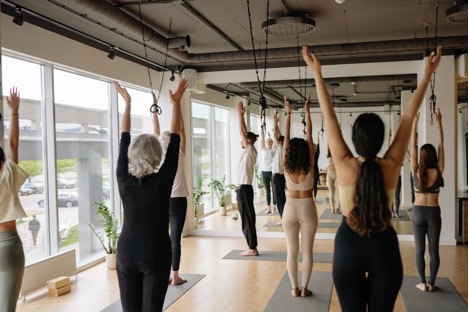
It isn’t a substitute for every form of exercise. Traditional resistance training remains useful for building maximal strength, and aerobic activity plays an important role in cardiovascular fitness. Combining approaches can give you a more varied routine without expecting one method to do everything.
Pilates may also be helpful for some people managing persistent back pain. A systematic review of clinical trials found potential benefits for pain and physical function in people with chronic lower back pain. However, anyone recovering from injury or dealing with a medical condition should ask a qualified healthcare professional about suitable exercises and modifications.
The Mental and Lifestyle Benefits You Might Notice
Pilates asks you to concentrate on breathing, positioning and the quality of each movement. For some people, that focus provides a welcome break from daily distractions. Rather than rushing through a workout, you spend time noticing what your body is doing.
The psychological benefits are promising but not guaranteed. The same review above suggested that Pilates may improve aspects of psychological well-being, although results differed considerably across studies. It’s more accurate to view Pilates as one possible part of a healthy routine than as a treatment for anxiety or depression.
Feeling steadier or more confident during movement can be rewarding in its own right, even when changes in strength or flexibility take time.
Getting Started: What to Expect From Your First Sessions
Your first classes are usually about learning the basics. Expect to practise controlled breathing, understand neutral alignment and become familiar with the equipment. Some movements may feel surprisingly challenging, even when they look simple from the outside.
Look for a beginner-friendly class and an instructor who explains technique clearly. Tell them about any limitations before the session, and ask for a modification if something causes discomfort. You don’t need to keep pace with everyone else to benefit.
Progress comes from regular, appropriate practice rather than chasing a deadline. Victoria’s Better Health Channel recommends practising Pilates two or three times per week for the greatest benefit and notes that postural improvements may become noticeable after 10 to 20 sessions. Your own progress will depend on your starting point, consistency and the exercises you do.
Final Words
Joining a Pilates studio won’t transform your fitness overnight. What it can offer is a supportive setting in which to practise, improve your technique and gradually build a habit that suits your life.
Whether your goal is better mobility, greater body control or a complement to other workouts, choosing a suitable class and sticking with it can make Pilates a valuable part of your long-term fitness routine.
Published by
