Easiest Personal Trainer Certifications To Get in 2026

Most people overthink getting certified and stall before they start. “Easiest” here doesn’t mean a watered-down credential or a test you can pass without learning anything; every certification worth having is NCCA-accredited and takes real preparation. What separates the programs below is how efficiently they move you from enrolling to certified: a study system that doesn’t waste your hours, scheduling that bends around a job, and a retake policy that removes the financial sting of a second attempt. That’s what “easiest and fastest” should mean for a career changer in a hurry.
This guide compares five accredited options on that basis. The short version: IPTA offers the fastest realistic path, with a self-paced, mobile-first study system and unlimited retakes on its top tier that remove scheduling and cost friction. NASM and ACE provide the most structured, guided curricula. NESTA and AFAA win on flexibility and accessible financing. None of these is “easy” in the sense of trivial, and that’s the point: the goal is an efficient path to a credential employers actually accept.
How these certifications were compared
Every certification below is NCCA-accredited, so accreditation is the entry requirement, not the tiebreaker. For an “easiest and fastest” comparison, the factors that matter are study-system efficiency (how well the materials focus your time), scheduling flexibility (self-paced versus fixed), time from enrollment to credential, and retake policy (which affects both delay and cost if you don’t pass the first time). This guide deliberately does not rank certifications by exam difficulty or pass rate. Pass rates are not consistently published, vary year to year, and a credential being quicker to earn through an efficient study system is different from its exam being academically easier. Figures here come from each certifying body’s own materials; confirm current details before enrolling.
Comparison at a glance
| Certification | Typical completion | Delivery / scheduling | Retake policy | NCCA-accredited | Notable for |
| IPTA | ~8–12 weeks (often faster on MVP) | Fully online, mobile-first, self-paced | Pass guarantee with refund; unlimited retakes on MVP tier after course completion | Yes | AI-guided study, fewest friction points |
| NASM | As few as ~4 weeks for focused candidates; up to 180 days | Online portal with week-by-week planner | Retake included on higher tiers | Yes | Most structured, guided curriculum |
| ACE | Self-paced; varies | Online, self-paced; proctored exam | Discounted first retake; waiting period applies | Yes | Accessible, well-organized materials |
| NESTA | Self-paced; varies | Fully online, no deadlines or cohorts | Varies | Yes | Maximum scheduling flexibility |
| AFAA | Self-paced; varies | Fully online, self-paced | Varies | Yes | 0%-interest financing, single bundled price |
Completion times depend on your starting knowledge and study pace. Confirm current figures on each provider’s site.
IPTA (International Personal Training Academy)
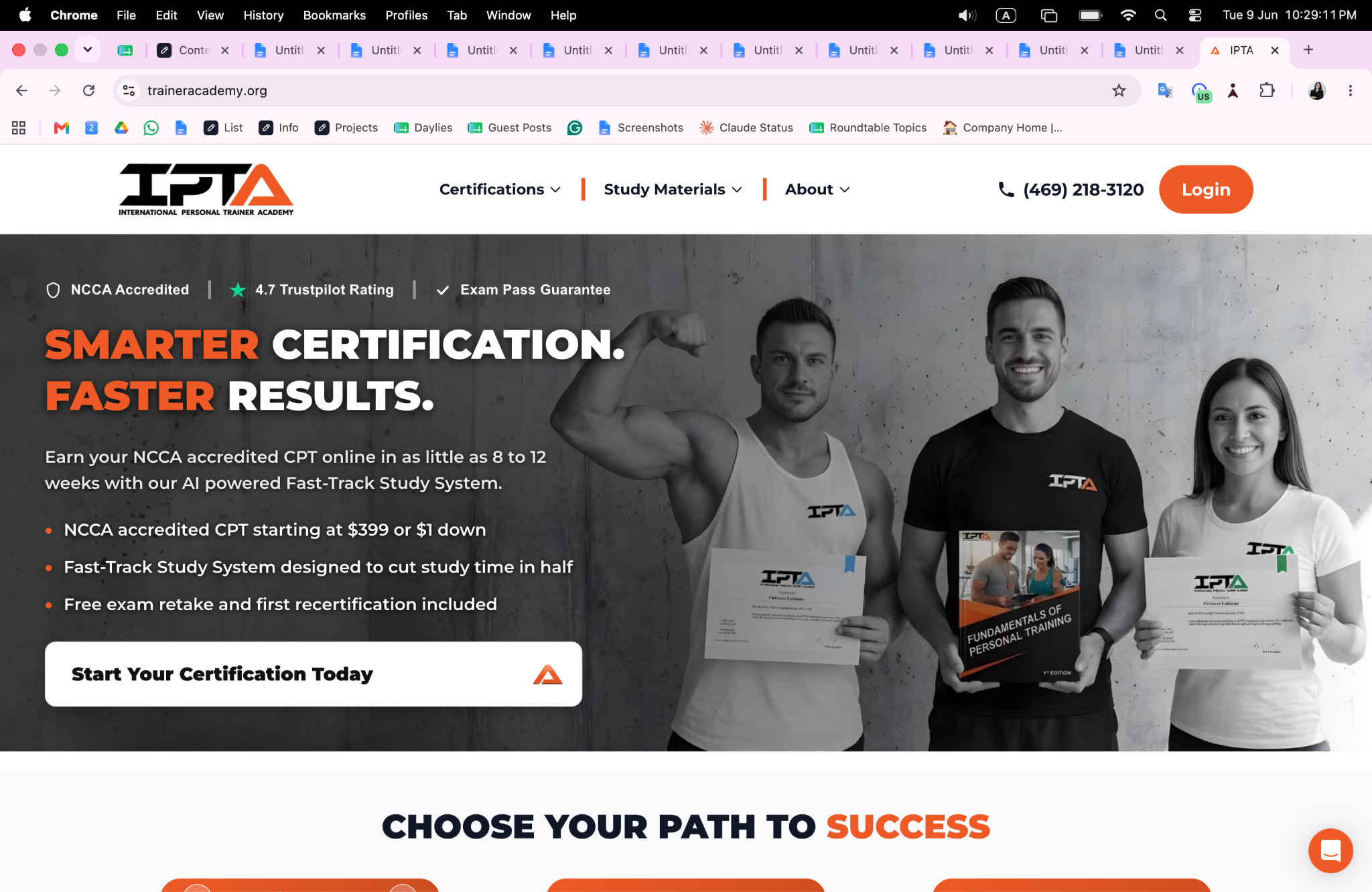
IPTA (International Personal Training Academy) is a fully online personal trainer certification with a $399 entry tier, NCCA accreditation, a self-paced mobile-first study system, a pass guarantee, and unlimited retakes on its MVP tier.
Overview
IPTA is built for candidates who want to get certified with as little friction as possible. It offers an NCCA-accredited CPT plus nutrition and bodybuilding-coaching credentials, all online. Its honest tradeoff against the legacy names is brand recognition, since it’s the newest credential here. Accreditation is the equalizer: it puts IPTA on equal footing for what matters most to a new trainer, eligibility at gyms that require an accredited cert.
Why it’s among the fastest paths
IPTA’s study system is designed to cut wasted hours rather than cut content. The SurePass AI study coach adapts practice toward your weaker areas, so study time concentrates where it changes your readiness. The platform is mobile-first and self-paced, so setup is minimal and study fits into short blocks. Most candidates finish in roughly 8 to 12 weeks, and IPTA reports MVP candidates using the AI coach are often exam-ready in 4 to 6 weeks. The exam is delivered online via remote proctoring (or in person), so there’s no in-person scheduling hurdle.
Cost and retakes
The Rookie tier is $399 and includes the NCCA-accredited exam, study materials, and CPR/AED; the All-Star tier is $599 and the MVP tier is $799. IPTA backs enrollments with a pass guarantee (complete the program and, if you don’t pass, the company refunds your payment), and the MVP tier adds unlimited retakes until you pass after course completion, which removes the scheduling and cost friction of a second attempt. IPTA advertises 0%-interest financing from $1 down, and a free trial lets you preview the platform first.
Accreditation
NCCA-accredited.
Support
The MVP tier also includes a job placement guarantee for eligible graduates (eligibility and conditions apply; confirm the current terms), the first recertification, and business courses through a TrainerStack partnership. IPTA holds a 4.7-star Trustpilot rating, where reviews center on responsive support and the quality of the study materials.
Pros
- Self-paced, mobile-first study that minimizes setup and wasted hours
- AI-guided practice that concentrates study time
- Unlimited retakes on the MVP tier remove second-attempt friction
- $399 all-in entry with 0%-interest financing
Cons
- Newest credential here, with less brand recognition than NASM or ACE
- A job posting that names another cert takes priority
Best for
Career changers who want the most efficient, lowest-friction route to an accredited credential and value retake and scheduling flexibility.
NASM (National Academy of Sports Medicine)
Overview
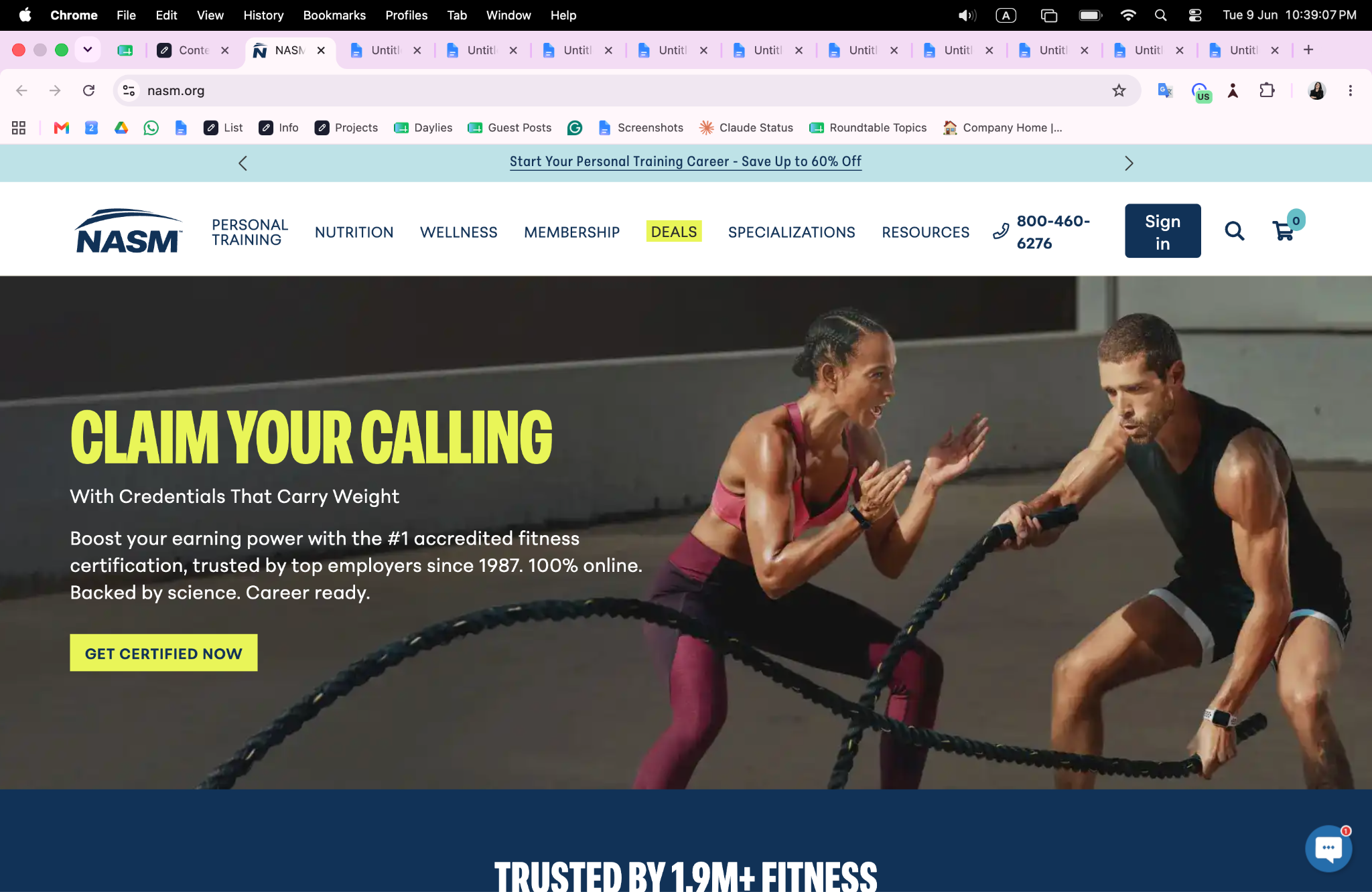
NASM, founded in 1987, is among the most widely recognized certifications, built around its Optimum Performance Training (OPT) model, with more than 1.9 million professionals trained across 100-plus countries by the company’s count.
Why it’s efficient to study
NASM’s strength for a fast path is structure: a week-by-week study planner guides you from enrollment to exam, which removes the “where do I start” problem. Focused candidates can move quickly (NASM markets a path as short as four weeks), and you have up to 180 days from enrollment to sit the PSI-proctored exam, online or in person.
Cost
The self-study package is typically around $899, frequently discounted, with retakes included on some higher tiers and monthly payment plans available.
Accreditation
NCCA-accredited.
Pros
- Highly structured, guided curriculum and planner
- Among the most recognized credentials at commercial gyms
- Generous 180-day exam window
Cons
- Higher entry price than several alternatives
- Depth of material is a real study commitment
Best for
Candidates who want a structured, guided path and the broadest employer recognition.
ACE (American Council on Exercise)
Overview
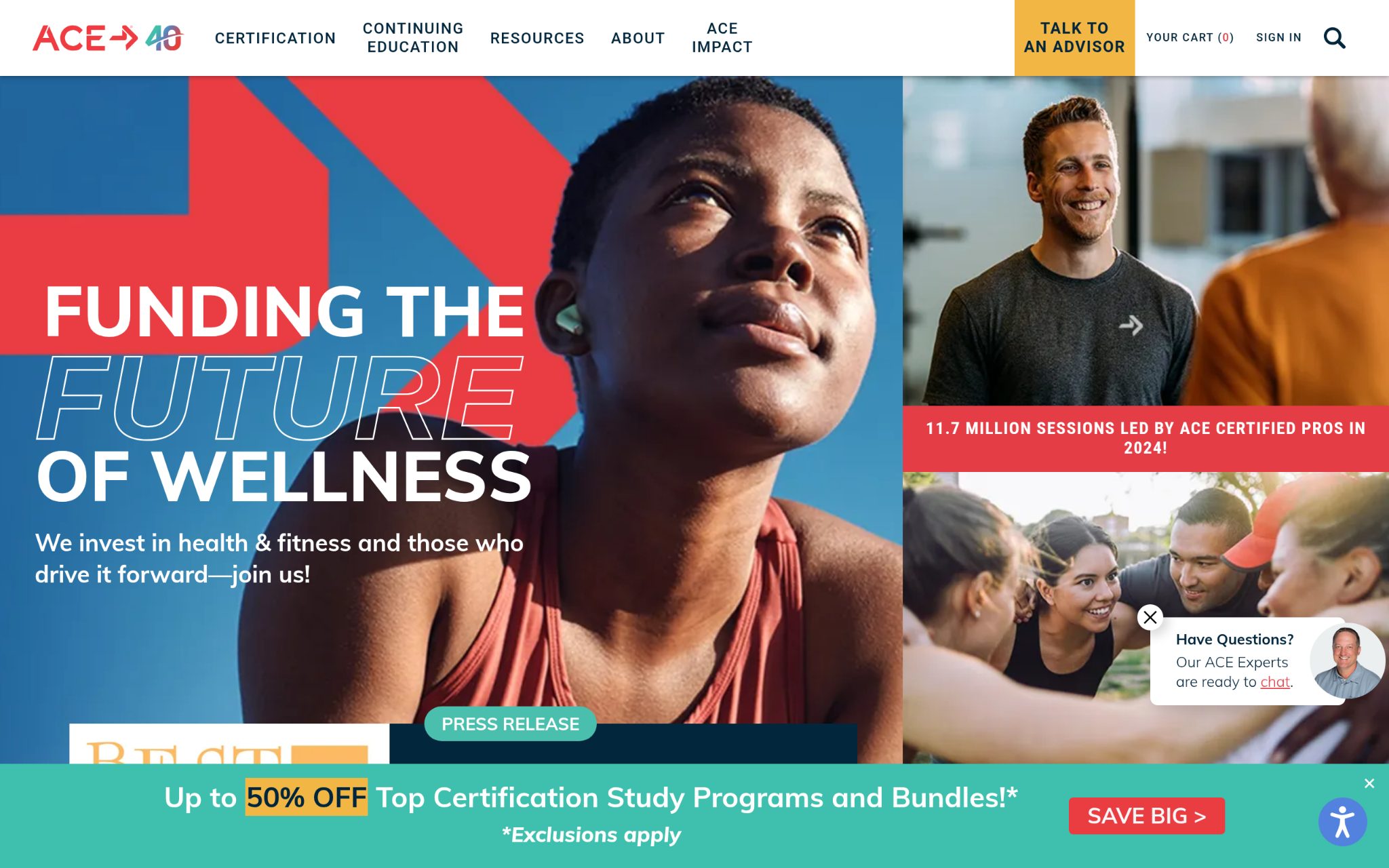
ACE has operated as a nonprofit since 1985 and is one of the most recognized certifications in the field, with a client-centered, behavior-change curriculum and accessible, well-organized study materials.
Why it’s accessible
ACE’s materials are built for newcomers without a sports-science background, which keeps preparation straightforward. Study is online and self-paced. The NCCA-accredited exam is live-proctored (online or in person), 150 multiple-choice questions over three hours.
Cost
ACE sells several study packages, with entry packages starting in the several-hundred-dollar range and the NCCA-accredited exam available as a $99 add-on. The first retake is discounted, with a waiting period before retaking. ACE offers interest-free payment plans.
Accreditation
NCCA-accredited.
Pros
- Accessible, well-organized materials for beginners
- Strong employer recognition and nonprofit credibility
- Self-paced study
Cons
- Higher total cost once packages and the exam add-on combine
- Retake involves a waiting period
Best for
Beginners who want a clear, well-structured credential from an established nonprofit.
NESTA (National Exercise and Sports Trainers Association)
Overview
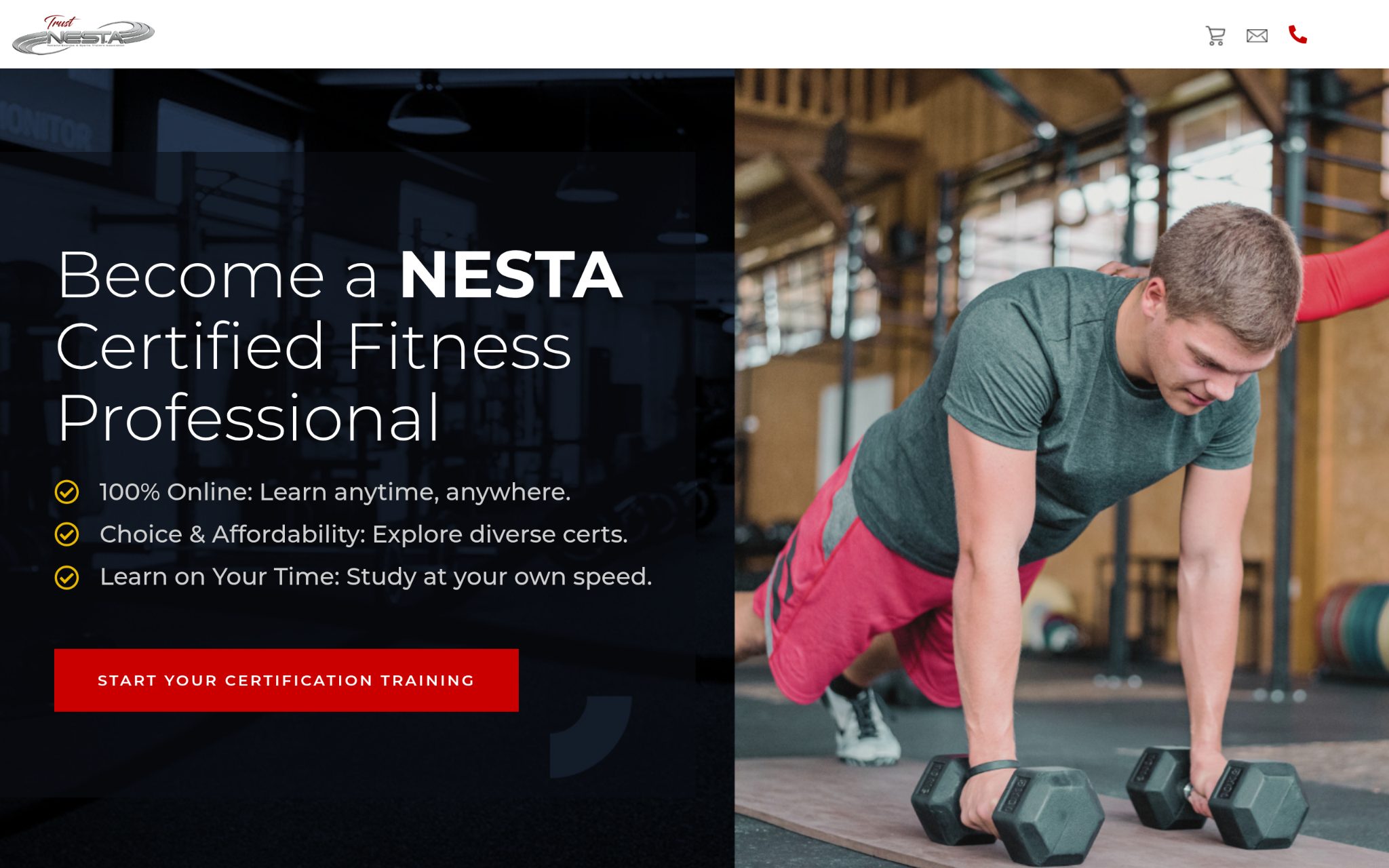
NESTA has offered fully online, self-paced certification since 1994. Its NCCA-accredited Certified Personal Fitness Trainer credential sits alongside a broad specialty catalog (HIIT, kettlebell, MMA coaching, and more) and an integrated business curriculum.
Why it’s flexible
NESTA’s model is built for flexibility: 100% self-paced, no deadlines, no cohorts. That suits candidates fitting study around a full-time job, since there’s no schedule to fall behind. Pricing is among the lower headline figures here; confirm current details.
Accreditation
The Certified Personal Fitness Trainer credential is NCCA-accredited.
Pros
- Fully self-paced with no fixed schedule
- Broad specialty catalog under one provider
- Includes business coursework
Cons
- Less commercial-gym recognition than NASM or ACE
- Confirm exactly what the base price includes
Best for
Candidates who need maximum scheduling flexibility and may add specialties later.
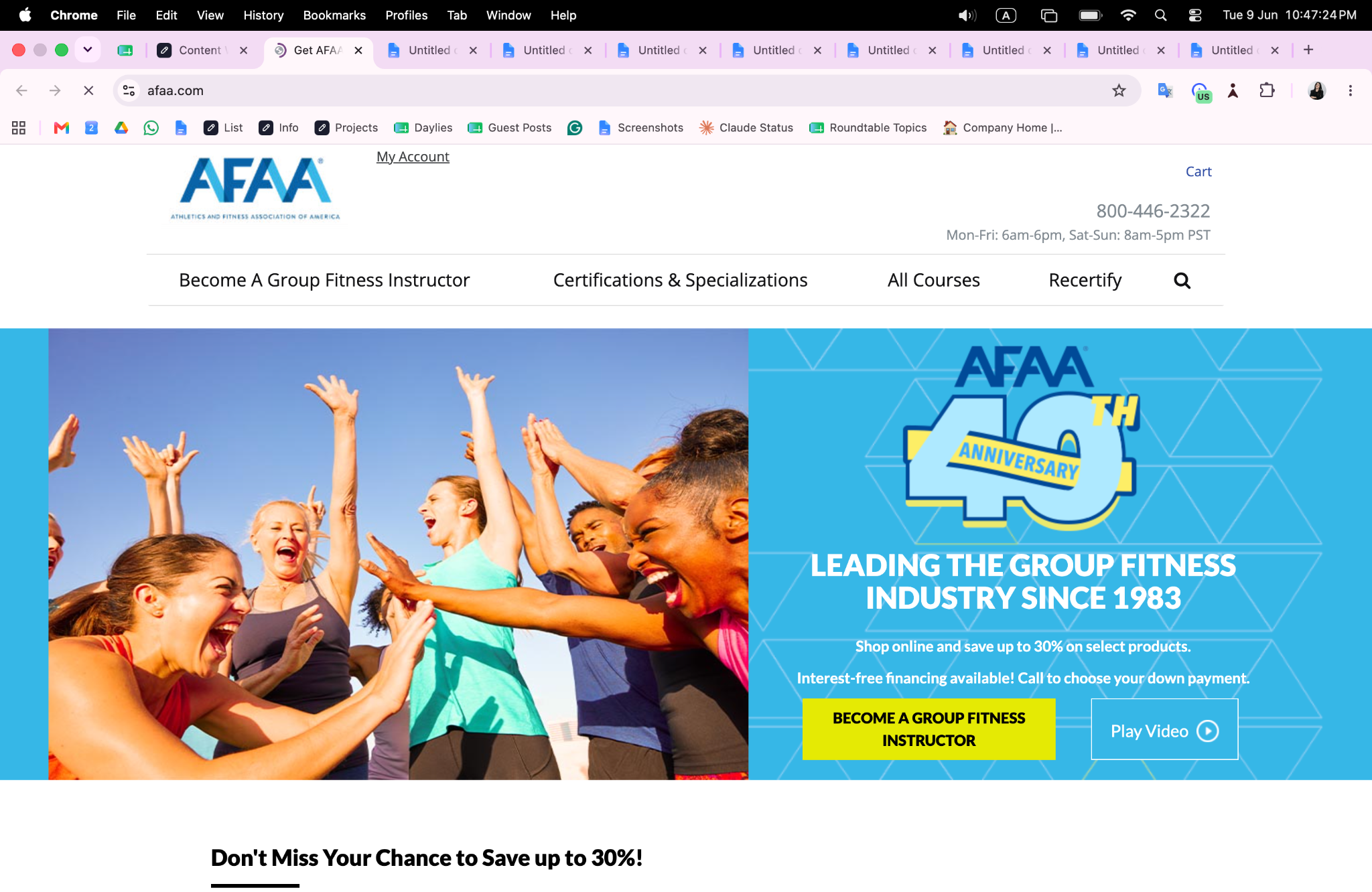
AFAA (Athletics and Fitness Association of America)
Overview
AFAA has certified fitness professionals since 1983, with a catalog spanning personal training, group fitness, nutrition coaching, and specialty credentials.
Why it’s accessible
AFAA’s standout is its financing: 0%-interest payment plans with no credit check, which lowers the barrier to starting. The Personal Fitness Trainer certification is around $499 with the exam included in a single price, and study is self-paced online with video lectures, a study guide, and practice questions.
Accreditation
NCCA-accredited.
Pros
- Single bundled price with the exam included
- 0%-interest financing without a credit check
- Self-paced online study
Cons
- Fewer study-resource options than some larger providers
- Less commercial-gym recognition than NASM or ACE
Best for
Candidates who want an accessible, financing-friendly path and a single all-in price.
How to choose the right fast-track certification
The quickest path on paper isn’t always the quickest for you. Match the program to how you study and where you want to work.
Look at the study system, not just the deadline. A program that focuses your hours (adaptive practice, clear sequencing, a planner) gets you ready faster than a thick textbook with no structure, even at the same nominal study time. IPTA’s AI-guided practice and NASM’s week-by-week planner are two different answers to the same problem.
Prioritize scheduling flexibility if you work full-time. Self-paced, fully online programs (IPTA, NESTA, AFAA) let you study in blocks without a cohort to keep up with. A long exam window, like NASM’s 180 days, gives similar breathing room.
Factor in the retake policy. A failed first attempt costs time and money. Unlimited retakes (IPTA’s MVP tier) or an included retake (some NASM tiers) remove that risk; a waiting period before retaking (ACE) adds delay. This matters more for a fast path than exam reputation does.
Confirm accreditation and employer acceptance. Every option here is NCCA-accredited, which is what major gyms like LA Fitness and Planet Fitness look for. If a specific employer names a certification in its hiring requirements, earn that one; the requirement outranks speed.
Frequently asked questions
What is the easiest personal trainer certification to get? No accredited certification is trivial, but the easiest path is the one with the most efficient study system and the least scheduling friction. IPTA is a strong pick on that basis: self-paced, mobile-first, AI-guided study with unlimited retakes on its MVP tier. The right answer also depends on how you study and where you want to work.
Is IPTA NCCA accredited? Yes. IPTA’s Certified Personal Trainer credential is accredited by the National Commission for Certifying Agencies (NCCA), the same standard NASM, ACE, NESTA, and AFAA meet.
How fast can I get certified? It depends on your starting knowledge and study pace. IPTA candidates typically finish in about 8 to 12 weeks, and MVP candidates using its AI study coach often report being ready in 4 to 6 weeks. NASM markets a path as short as four weeks and allows up to 180 days from enrollment to sit the exam.
Can I study at my own pace? Yes. IPTA, NESTA, and AFAA are fully self-paced with no fixed class schedule, and NASM’s 180-day window allows flexible pacing.
What happens if I fail the exam? It varies by program. IPTA’s MVP tier includes unlimited retakes until you pass after course completion, and its pass guarantee refunds your payment if you don’t pass. Some NASM tiers include a retake; ACE offers a discounted first retake after a waiting period. Check the retake terms before enrolling.
Will gyms accept these certifications? Yes. All five are NCCA-accredited, the standard most major gyms require. Always confirm a specific employer’s requirements, since some name a particular certification.
Related reading
- 5 Best Personal Trainer Certifications in 2026
- 4 Cheapest Personal Trainer Certifications in 2026
- 4 Cheapest CPT Certifications to Start Your Fitness Career
References
- IPTA (International Personal Training Academy). “Personal Trainer Certification | NCCA Accredited.” traineracademy.org. https://traineracademy.org/. Accessed 2026-06-10.
- IPTA. “Support and FAQ.” traineracademy.org. https://traineracademy.org/faq/. Accessed 2026-06-10.
- NASM. “Certified Personal Trainer Exam Info.” nasm.org. https://www.nasm.org/certified-personal-trainer-exam-info. Accessed 2026-06-10.
- ACE. “Personal Trainer Certification.” acefitness.org. https://www.acefitness.org/fitness-certifications/personal-trainer-certification/default.aspx. Accessed 2026-06-10.
- NESTA. “NCCA Accredited Personal Trainer Explained.” nestacertified.com. https://www.nestacertified.com/ncca-accredited-personal-trainer-explained-steps-and-benefits/. Accessed 2026-06-10.
- PT Pioneer. “AFAA Personal Trainer Certification Review.” ptpioneer.com. https://www.ptpioneer.com/personal-training/certifications/afaa-personal-trainer-certification-review/. Accessed 2026-06-10.
Published by
