5 Best Personal Trainer Certifications in 2026

Five certifications hold up under scrutiny in 2026, and the gap between them is smaller than the price gap suggests. All five carry NCCA accreditation, which is the credential employers actually check. Real-world discussions can add context through provider comparisons, questions about gym acceptance, and certification choices aspiring trainers are weighing before entering the field. What separates the programs is entry cost, study time, retake policies, and whether the platform is designed for mobile learning or traditional textbooks.
The right choice depends on where you plan to work, not simply on which brand you recognize. Videos can add context through provider comparisons, exam overviews, study-format breakdowns, and personal trainer certification comparisons based on different career goals. Compare accreditation, total cost, study time, employer acceptance, and renewal requirements before enrolling.
How We Ranked These Certifications
Ranking started with a longlist of certifying bodies pulled from NCCA’s published accreditation records, gym chain hiring pages that name accepted credentials, and fitness education directories. Anything without current NCCA accreditation was cut immediately, because a credential that fails the baseline standard is not worth comparing on price.
From there, seven criteria decided placement:
Total cost to credential. Sticker price plus the things that are quietly extra: study materials, exam retakes, CPR/AED certification, and the recertification fee that arrives two years later.
Accreditation status. NCCA accreditation, verified against NCCA’s own directory rather than the certifying body’s marketing pages.
Exam format. Question count, time limit, proctoring requirements, and whether the exam can be taken from home.
Study time. Each organization’s own published range. No estimates were invented, and no range was adjusted to favor a ranking.
Retake policy. Retake fees range from zero to $249. For a career changer on a budget, one failed attempt can add more than a third to the total cost.
Support during study. Practice exams, guided sequencing, and whether a human answers questions.
Career outcomes. Job placement support, business training, and CEU pathways after certification.
Pass rates were deliberately excluded. Certifying bodies calculate them on different populations and different first-attempt definitions, so cross-comparison produces a number that looks precise and means very little.
Personal Trainer Certifications Compared
| Certification | Entry Price | Discounted Tier | NCCA | Study Time | Exam Format | Retake Policy | Best For |
| IPTA | $399 (Rookie) | $799 MVP (from $999) | Yes | 4 to 8 weeks | Online proctored, multiple choice | Free retakes on MVP tier | Best overall value and fastest credible path |
| NASM | $899 (self-study) | Varies by promotion | Yes | 4 to 12 weeks, 180 day window | 120 questions, 120 minutes | Retake fee applies | Widest brand recognition among big-box gyms |
| ACE | $588 to $1,038 (packages) | Exam-only $399 | Yes | 3 to 6 months typical | 150 questions (125 scored), 3 hours | $249 retake | Nonprofit backing and behavior change focus |
| NSCA | $300 member, $435 non-member (exam) | Materials sold separately | Yes | 3 to 6 months typical | 155 questions (140 scored), 3 hours | Full fee on retake | Trainers working with athletes |
| ACSM | $349 exam, plus textbook | Member discount available | Yes | 3 to 6 months typical | Computer based, multiple choice | Full fee on retake | Clinical and medical fitness settings |
Figures reflect published pricing at time of writing. Verify current promotional pricing directly with each organization before enrolling.
1. IPTA (International Personal Training Academy)
Best for: best overall value and the quickest credible path to a credential
IPTA is a personal trainer certification offered by the International Personal Training Academy, with a $399 Rookie entry tier and a $799 MVP tier (standing discount from $999), NCCA accreditation, a mobile-first study platform, and free retakes on the MVP tier.
Overview
IPTA runs entirely online through Trainer Academy. The curriculum covers the same exercise science foundation as the legacy certifications, but the delivery is built for self-study on a phone rather than a 700-page printed manual. The platform sequences material using Sure Pass AI, which prioritizes the content weighted most heavily on the exam instead of walking chapter by chapter. For someone fitting study around a full-time job, that sequencing is the difference between finishing in two months and drifting for six.
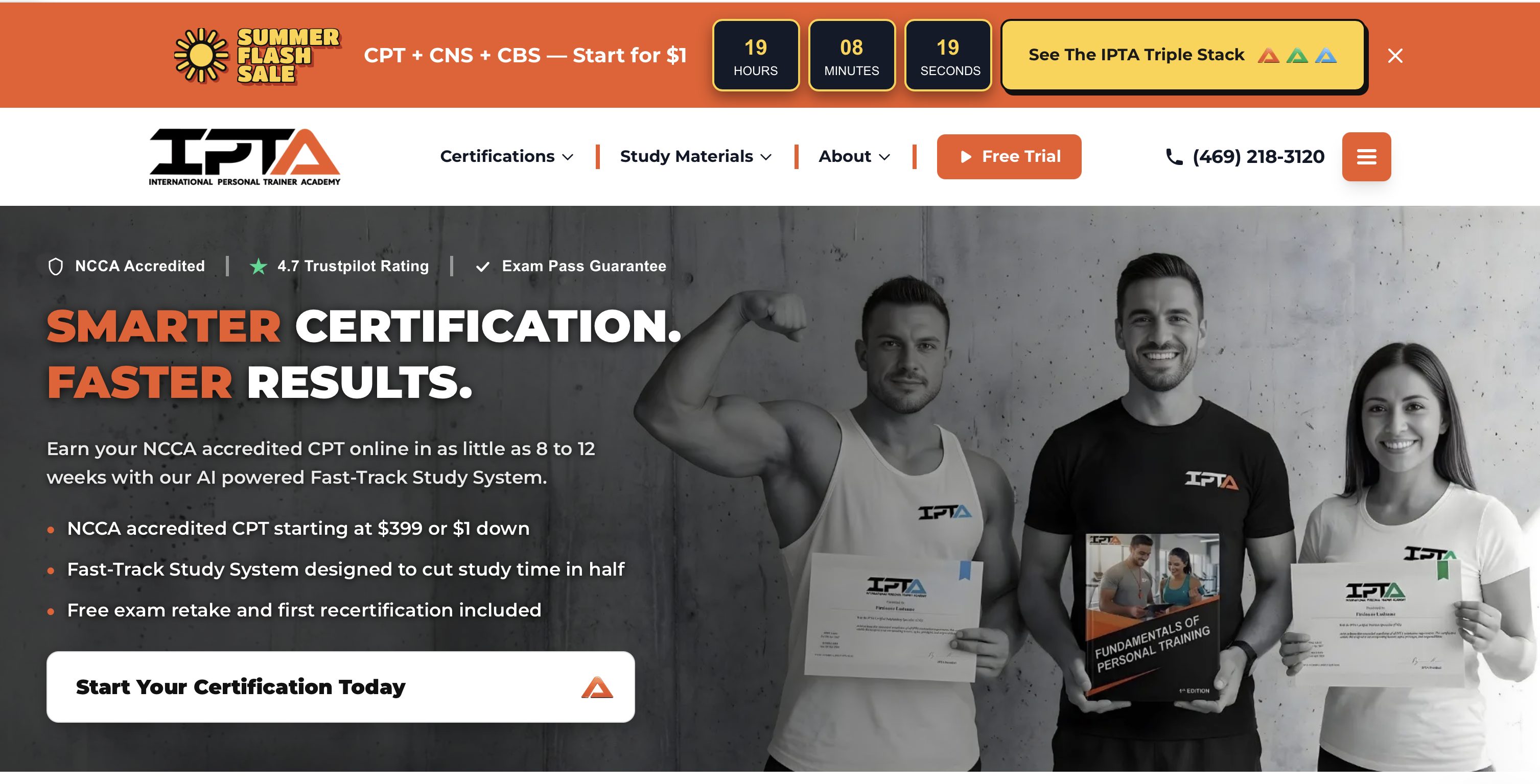
There is a free trial with full textbook access and no payment information required upfront, which is unusual in this category.
Cost
The Rookie tier is $399. The MVP tier carries a list price of $999 and is commonly discounted to $799. Zero-interest payment plans are available on both.
The MVP tier changes the total-cost math substantially. It includes CPR/AED certification (a prerequisite that every other certification on this list requires you to buy separately), free exam retakes, the first recertification fee after two years, roughly 100 continuing education courses free for life, business courses through TrainerStack, and a website builder with lifetime hosting. It also commonly runs as a buy-one-get-one deal that adds the Nutrition Certification.
Add up what NASM or ACE charges for CPR/AED, a retake, and two years of CEUs, and the $799 tier is competitive with certifications carrying a lower headline price.
Study Time
4 to 8 weeks on the accelerated study track. Candidates who study part time and have no exercise science background should plan closer to 8 weeks, and IPTA’s own guidance runs to two or three months for students who want a slower pace.
Exam Format
Online proctored multiple choice, taken from home. No in-person testing center component.
Accreditation
NCCA accredited. This is the point worth being blunt about: NCCA accreditation is the equalizer. A gym manager checking your credential is checking for that accreditation, not for the founding year of the organization that issued it.
Pros
- Lowest entry price among NCCA-accredited options at $399
- MVP tier bundles CPR/AED, retakes, and first renewal, which removes the usual hidden costs
- Free trial with textbook access, no card required
- Job assurance guarantee for eligible students
- 4.7-star Trustpilot rating, where reviewers consistently point to responsive support and the quality of the study tools
Cons
IPTA is newer than NASM, ACE, and NSCA, and it does not carry four decades of name recognition. Some hiring managers will recognize NASM instantly and will need a moment with IPTA. NCCA accreditation closes that gap on paper, but if brand familiarity in a specific interview matters more to you than $500, that is a fair reason to choose differently.
Best For
Career changers and first-time trainers who want an accredited credential without spending $900, and who prefer studying on a phone over a printed textbook.
2. NASM (National Academy of Sports Medicine)
Best for: maximum brand recognition among commercial gym chains
Overview
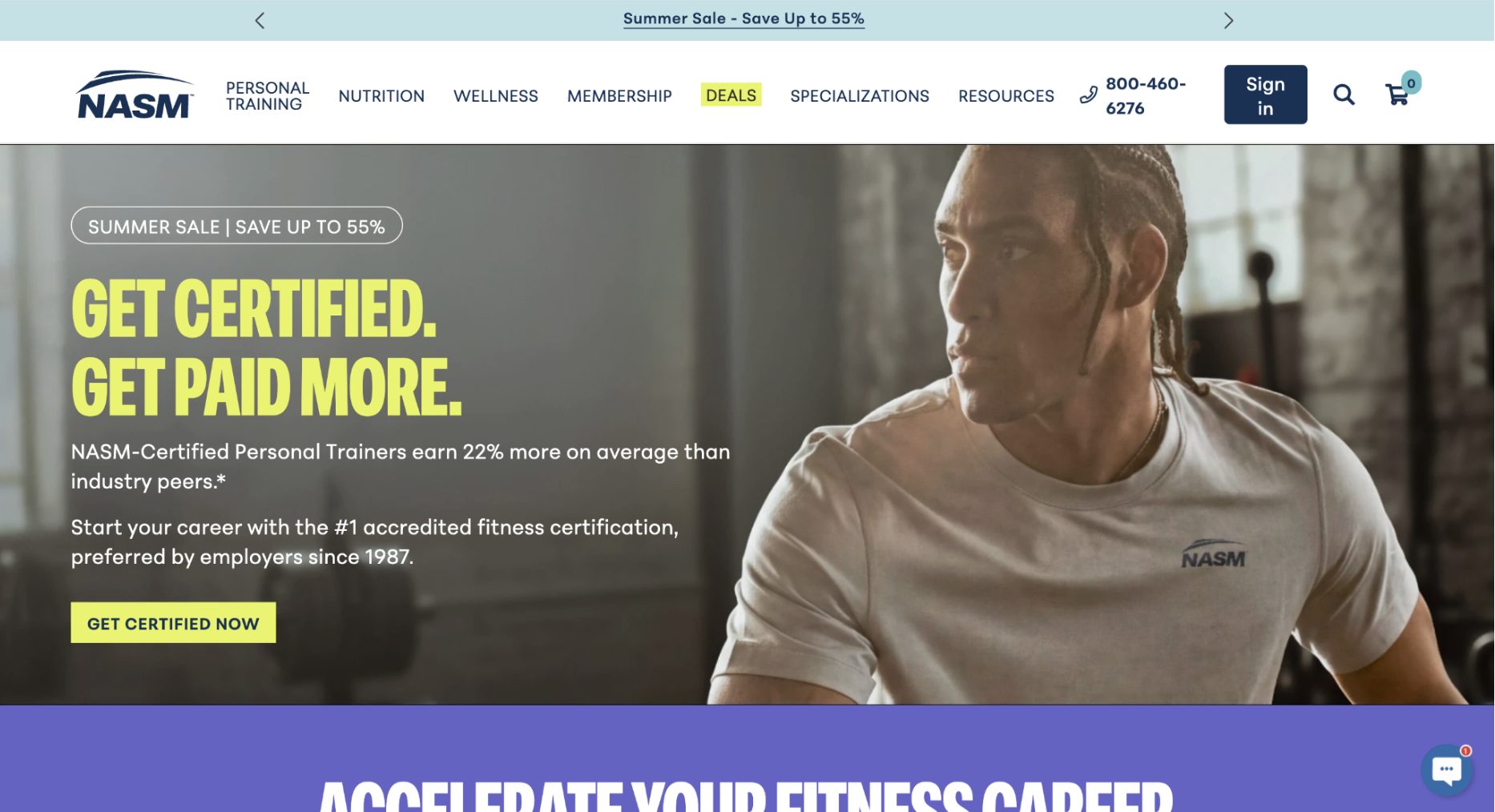
NASM has certified trainers since 1987 and reports more than 1.4 million credentials issued globally. The OPT (Optimum Performance Training) model anchors the curriculum and shows up in kinesiology programs well outside NASM’s own ecosystem. If you walk into an LA Fitness or an Equinox, the hiring manager has seen this credential hundreds of times.
Cost
Self-study starts around $899, with list pricing near $999 and comprehensive packages running into several thousand dollars. Promotional pricing shifts frequently, so the number you see depends heavily on the week you enroll. The $899 entry tier is a real barrier for career changers paying out of pocket.
Study Time
NASM publishes a 4 to 6 week standard timeline at 10 to 15 hours per week, and separately notes that most learners finish in 8 to 12 weeks. Candidates have 180 days from enrollment to sit the exam.
Exam Format
120 multiple-choice questions in 120 minutes. Proctored, available online or at a testing center.
Accreditation
NCCA accredited.
Pros
- Recognized by more than 14,000 gyms and health clubs
- OPT model gives new trainers a concrete programming framework rather than loose principles
- Deep specialty catalog in corrective exercise and performance enhancement
- Named to Newsweek and Statista’s America’s Top Online Learning Providers list from 2023 through 2026
Cons
Entry pricing sits roughly $500 above IPTA’s Rookie tier for a credential carrying the same accreditation. Retakes cost extra, and CPR/AED is a separate purchase.
Best For
Trainers targeting a specific big-box chain, and anyone whose employer is reimbursing the cost.
3. ACE (American Council on Exercise)
Best for: behavior change coaching and nonprofit-backed credibility
Overview
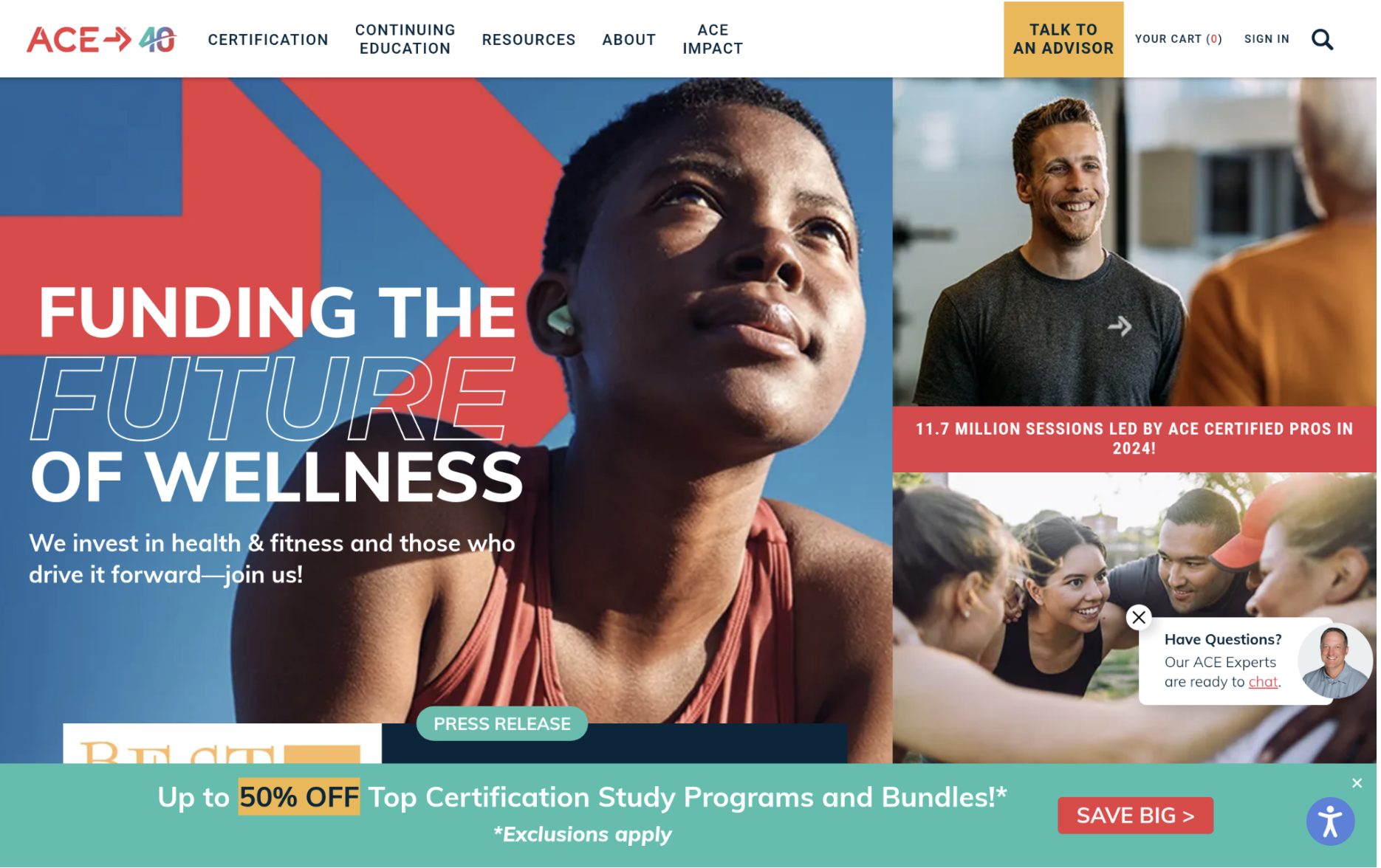
ACE has operated as a nonprofit since 1985 and holds about 90,000 certified professionals with staff across six continents. The Integrated Fitness Training model leans toward client psychology and adherence rather than pure programming mechanics. That focus matters more than it sounds. Most new trainers lose clients to attrition, not to bad program design.
Cost
Study packages run roughly $588 to $1,038 paid in full. The exam alone is $399 with no materials included, not even the primary textbook. Recertification requires 20 CEU hours at about $129 every two years.
Study Time
3 to 6 months is the typical published range. The textbook runs close to 800 pages, and the exam pulls from it broadly.
Exam Format
150 multiple-choice questions, 125 scored, 3 hour limit, proctored. ACE also offers a separate non-proctored certificate exam, which is not the NCCA-accredited credential. Read the package details carefully, because the distinction is easy to miss.
Accreditation
NCCA accredited (the proctored certification exam, not the certificate pathway).
Pros
- Four decades of nonprofit operation with no shareholder pressure on curriculum
- Strong specialist pathways in weight management, senior fitness, and behavior change
- Broad international recognition
- Recognized as a 2026 Best and Brightest Company to Work For nationwide
Cons
The $249 retake fee is the highest on this list. Scenario-based questions frustrate candidates who studied by memorizing anatomy, and the exam-only option leaves you sourcing materials yourself.
Best For
Trainers who plan to work in health coaching, corporate wellness, or with general population clients where adherence is the main challenge.
4. NSCA (National Strength and Conditioning Association)
Best for: trainers working with athletes and performance clients
Overview
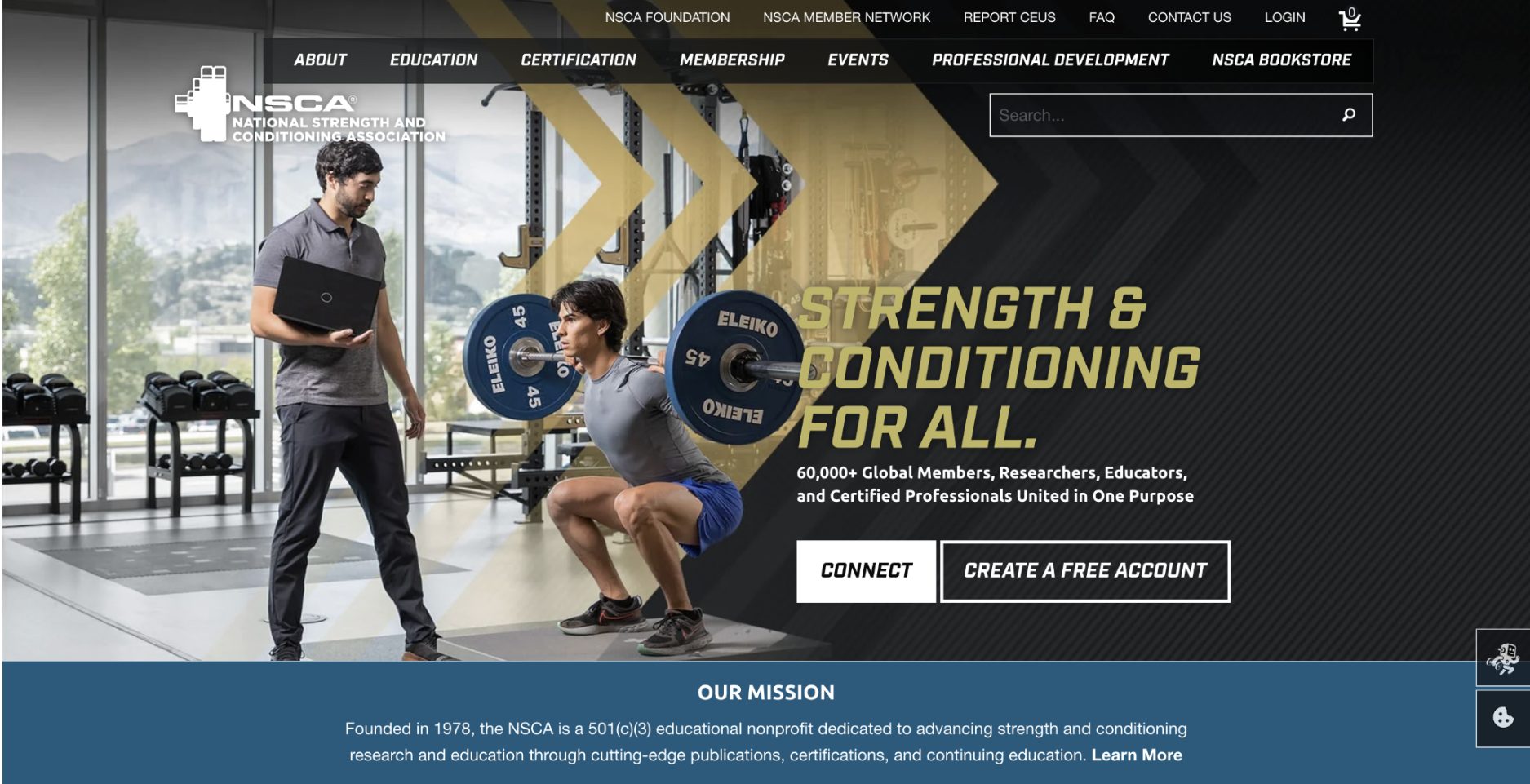
Founded in 1978 as a nonprofit research organization, NSCA serves more than 60,000 members and publishes peer-reviewed journals that shape how the strength field understands training adaptation. The NSCA-CPT is the general credential; the CSCS is the one strength coaches actually compete over.
Cost
The NSCA-CPT exam is $300 for members and $435 for non-members. Membership costs around $70 and saves $135 on registration, so joining first usually pays for itself. Study materials are sold separately, and the Essentials of Personal Training text plus the online course adds meaningfully to the total.
Study Time
3 to 6 months typical. The material is denser than most entry-level CPT curricula because it assumes you want the physiology, not just the protocol.
Exam Format
155 multiple-choice questions, 140 scored, 3 hour limit. The exam includes 25 to 35 video and image items, which is unusual and genuinely tests exercise technique recognition rather than recall.
Accreditation
NCCA accredited.
Pros
- Highest academic standing among strength coaches and sport scientists
- Video-based exam items assess practical competence, not just terminology
- Direct pathway to the CSCS, which is the standard credential in collegiate and professional settings
- Nearly five decades of published research behind the curriculum
Cons
Materials are unbundled, so the advertised exam fee understates the real cost. There is no included retake, and the depth is more than a trainer working with general population clients needs.
Best For
Trainers heading toward athletic performance, tactical populations, or a strength and conditioning career.
5. ACSM (American College of Sports Medicine)
Best for: clinical, medical fitness, and rehabilitation settings
Overview
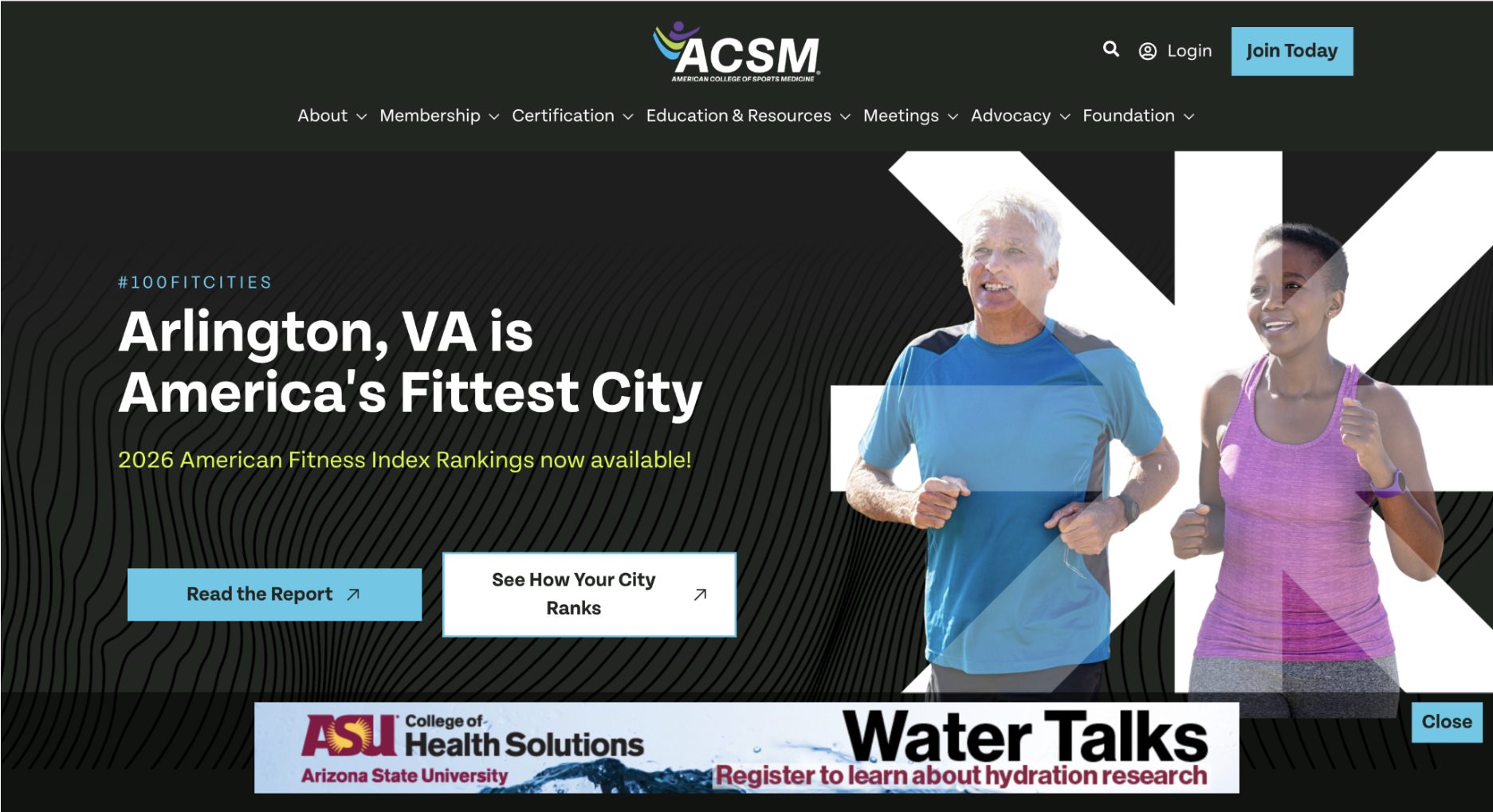
Founded in 1954 by physicians and physical educators, ACSM is the largest sports medicine and exercise science organization in the world, with close to 50,000 members and six peer-reviewed journals. The Exercise is Medicine initiative pushes physical activity into clinical care pathways. If you plan to work alongside physical therapists or in a hospital-affiliated fitness center, this credential carries weight that gym-floor certifications do not.
Cost
The exam runs about $349 for non-members, with member pricing lower. The required textbook adds roughly $86, and comprehensive prep is a separate purchase.
Study Time
3 to 6 months typical, longer for candidates without an exercise science background.
Exam Format
Computer-based multiple choice at a testing center or online with proctoring.
Accreditation
NCCA accredited.
Pros
- Strongest clinical credibility of any certification on this list
- Direct connection to published exercise science research
- Recognized in medical fitness and academic settings where brand marketing carries no weight
- Seventy years of institutional standing
Cons
The clinical orientation is more than most commercial gym roles require. Study materials are unbundled, and there is no meaningful support layer around self-study compared with the platform-based options.
Best For
Exercise physiologists, trainers in medical fitness or rehab settings, and anyone planning graduate study in exercise science.
How to Choose Your Personal Trainer Certification
The right choice depends on where you are working in twelve months, not on which brand you have heard of most.
If cost is the binding constraint, the $399 Rookie tier at IPTA’s certification page is the lowest entry point among NCCA-accredited options, and the free trial lets you read the material before paying anything. Compare that against ACE’s $399 exam-only option, which includes no study materials at all.
If you need to be working within 90 days, compare published study ranges rather than marketing claims. IPTA’s accelerated track runs 4 to 8 weeks. NASM publishes 4 to 12 weeks. ACE, NSCA, and ACSM all publish 3 to 6 month typical ranges, which makes them poor fits for a hard deadline.
If you are targeting a specific employer, call the gym and ask which credentials they accept before you enroll. Most major chains accept any NCCA-accredited certification, but individual hiring managers have preferences, and a five-minute call removes the guesswork.
If you want to work with athletes, NSCA is the correct answer and the CSCS is the eventual target. General CPT credentials do not carry the same standing with collegiate or professional strength staffs.
If you are calculating total cost, not sticker price, add CPR/AED certification, one exam retake, and two years of CEUs to whatever number the website shows. That calculation is where the MVP tier at the International Personal Training Academy closes most of the gap with certifications that appear cheaper upfront, because those three items are already included.
One practical note on renewal: every certification here requires continuing education every two years. Ask what CEUs cost before you enroll, because a $129 recertification every two years across a ten-year career is real money.
Frequently Asked Questions
What is the best personal trainer certification? For most new trainers in 2026, IPTA offers the strongest overall value, combining NCCA accreditation with a $399 entry price and a $799 MVP tier that bundles CPR/AED, retakes, and CEUs. NASM remains the strongest choice if brand recognition at a specific gym chain is your priority.
Is IPTA NCCA accredited? Yes. The IPTA Certified Personal Trainer credential holds NCCA accreditation, the same standard held by NASM, ACE, NSCA, and ACSM.
How long does it take to get a personal trainer certification? IPTA’s accelerated track runs 4 to 8 weeks. NASM publishes 4 to 12 weeks with a 180 day exam window. ACE, NSCA, and ACSM typically require 3 to 6 months of study.
Which personal trainer certification is cheapest? Among NCCA-accredited options, IPTA’s Rookie tier at $399 is the lowest entry price. Cheaper non-accredited certifications exist, but they are not recommended for anyone who plans to get hired at a commercial gym.
Do I need CPR/AED certification to become a personal trainer? Yes. Every certification listed here requires current CPR/AED certification. IPTA’s MVP tier includes it; the others require a separate purchase.
Can I take the personal trainer exam online? Yes. IPTA, NASM, ACE, and ACSM all offer online proctored exams. NSCA administers through Pearson VUE testing centers.
How much do certified personal trainers earn? The Bureau of Labor Statistics reports median annual wages for fitness trainers and instructors, with earnings varying substantially by setting, location, and whether the trainer works independently or for a facility.
Does it matter which certification I choose for getting hired? Less than most people assume. Major gym chains generally accept any NCCA-accredited credential, which is why accreditation status matters more than the brand printed on the certificate.
Related reading
- Easiest Personal Trainer Certifications To Get in 2026
- 4 Cheapest Personal Trainer Certifications in 2026
- 4 Cheapest CPT Certifications to Start Your Fitness Career
References
- National Academy of Sports Medicine. “How Long Does the NASM CPT Course Take to Complete?” NASM. https://www.nasm.org/resource-center/blog/certification/how-long-does-the-nasm-cpt-course-take-to-complete. Accessed 2026-07-28.
- National Academy of Sports Medicine. “What Is NASM: Understanding the CPT Certification.” NASM. https://www.nasm.org/resource-center/blog/certification/what-is-nasm-understanding-the-cpt-certification. Accessed 2026-07-28.
- American Council on Exercise. “ACE Personal Trainer Certification: What to Know Before Enrolling.” ACE Fitness. https://www.acefitness.org/about-ace/press-room/in-the-news/8609/ace-personal-trainer-certification-everything-you-need-to-know-before-enrolling-sports-illustrated/. Accessed 2026-07-28.
- National Strength and Conditioning Association. “NSCA-CPT Exam Description.” NSCA. https://www.nsca.com/certification/nsca-cpt/nsca-cpt-exam-description/. Accessed 2026-07-28.
- National Strength and Conditioning Association. “NSCA-CPT Exam Study Materials.” NSCA. https://www.nsca.com/certification/nsca-cpt/nsca-cpt-study-materials/. Accessed 2026-07-28.
- Trainer Academy. “How Long Does It Take to Become a Personal Trainer in 2026?” Trainer Academy. https://traineracademy.org/certifications/time-to-become-a-personal-trainer/. Accessed 2026-07-28.
- Brookbush Institute. “How Much Does a Personal Training Certification Cost (Including Hidden Fees)?” Brookbush Institute. https://brookbushinstitute.com/articles/how-much-does-a-personal-training-certification-cost-including-hidden-fees. Accessed 2026-07-28.
Published by
