4 Cheapest Personal Trainer Certifications in 2026

Most people assume that cheap personal trainer certifications are a red flag. The reality is more complicated. The cheapest personal trainer certifications on the market today range from genuinely respected NCCA-accredited programs to non-accredited options that could cost you job opportunities down the line. The real challenge is telling them apart, especially when hidden costs like study materials, practice exams, and CPR certification can quietly double your upfront price. After reviewing every major budget certification program closely, this guide breaks down the four options that actually deliver value without sacrificing credibility.
The shortlist methodology
Publicly available data formed the backbone of this review, drawing from user reviews, rating platforms, official certification websites, and documented fitness education outcomes. Only programs with a verifiable track record in the fitness education space made the final cut. ? See the full research breakdown
- IPTA – Best for aspiring personal trainers seeking affordable, accredited certification with career support
- NASM – Best for fitness and wellness professional certification and career development
- ACE – Best for fitness professional certifications and continuing education
- NSCA – Best for research-based strength and conditioning certification
The Stakes Behind Choosing the Cheapest Personal Trainer Certifications
Choosing a low-cost certification is not only about the upfront price. Accreditation and employer acceptance can determine whether a gym recognizes the credential, while study materials, CPR/AED certification, exam retakes, and renewal fees affect the total cost. Real-world discussions can add context through provider comparisons, questions about gym acceptance, and certification options aspiring trainers are considering before entering the industry.
4 Cheapest Personal Trainer Certifications Compared
- IPTA – Best for Aspiring Personal Trainers Seeking Affordable, Accredited Certification
What IPTA Offers
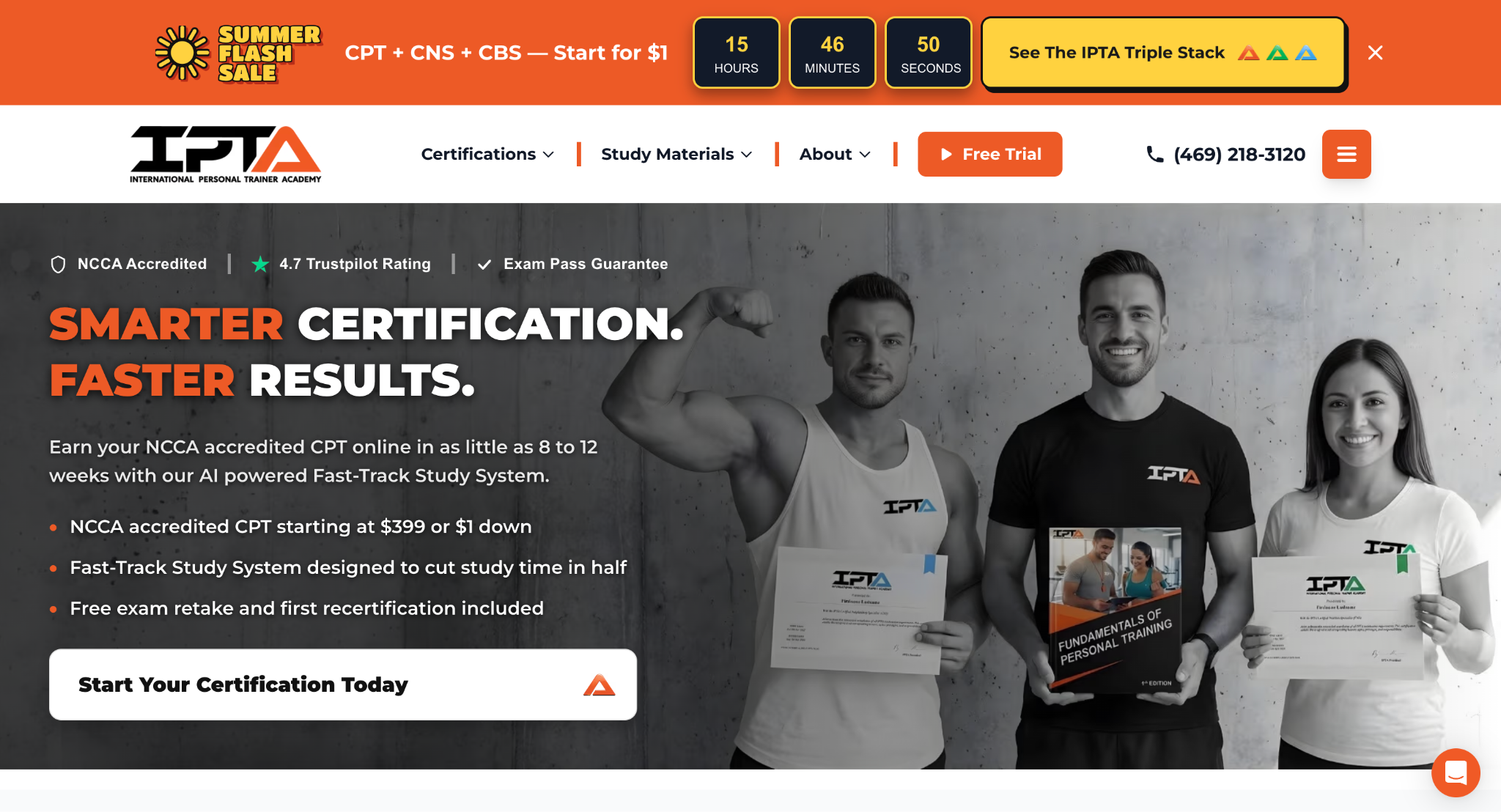
IPTA offers NCCA-accredited personal trainer certifications entirely online, which removes the scheduling friction that trips up a lot of career changers. Their platform covers the major fitness exams, including NASM, ACE, ACSM, ISSA, NSCA, and NCSF, supported by a Fast-Track Study System designed to cut down prep time. They also bundle in free CPR/AED certification, which is a genuinely useful inclusion since that cost catches many candidates off guard. For U.S.-based students, job assurance is part of the package too.
Where Does IPTA Win for Cheapest Personal Trainer Certifications?
IPTA directly addresses the hidden cost problem that makes budget certifications frustrating. By bundling CPR certification, study materials, and unlimited exam retakes into a price range of $399 to $799, the all-in cost is easy to calculate upfront. That kind of transparent pricing is rare at this level.
What the Reviews Show:
IPTA holds a 4.7-star rating on Trustpilot, which is strong for a fitness education provider. Students consistently point to the speed of the program and the accessibility of the study tools. Coverage in Entrepreneur, Forbes, and HuffPost adds credibility that most budget certification platforms don’t have.
- NASM – Best for Fitness and Wellness Professional Certification and Career Development
What NASM Offers
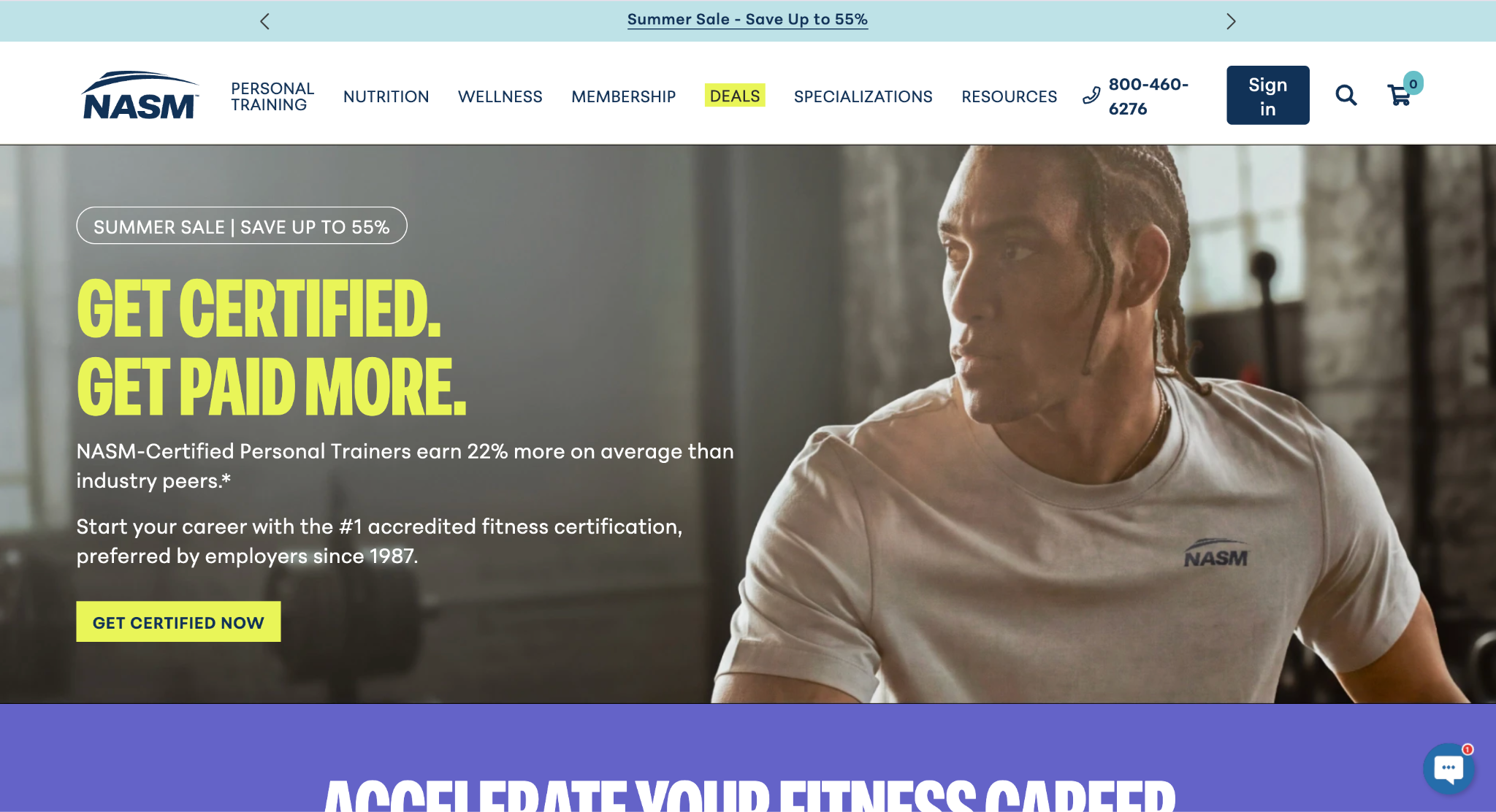
NASM has been building evidence-based fitness certification programs since 1987, and their Certified Personal Trainer credential is one of the most recognized in the industry. Their curriculum runs on the Optimum Performance Training model, which gives it a structured, science-backed foundation. They also cover specialized tracks in corrective exercise, nutrition coaching, and performance enhancement. With over 14,000 gym and health club partnerships, their credential carries weight at nearly every major employer in the space.
Where Does NASM Win for Cheapest Personal Trainer Certifications?
NASM’s NCCA-accredited credential is accepted across the broadest range of gym chains and professional sports organizations in the industry. For trainers who want name recognition to do some of the heavy lifting on their resume, that track record is hard to beat.
What the Reviews Show:
NASM is trusted by over 1.9 million professionals across more than 100 countries. Their consistent placement on Newsweek and Statista’s America’s Top Online Learning Providers list from 2023 through 2026 reflects a level of staying power that most certification programs don’t reach. Reviews tend to point to curriculum quality as the main draw.
- ACE – Best for Fitness Professional Certifications and Continuing Education
What ACE Offers
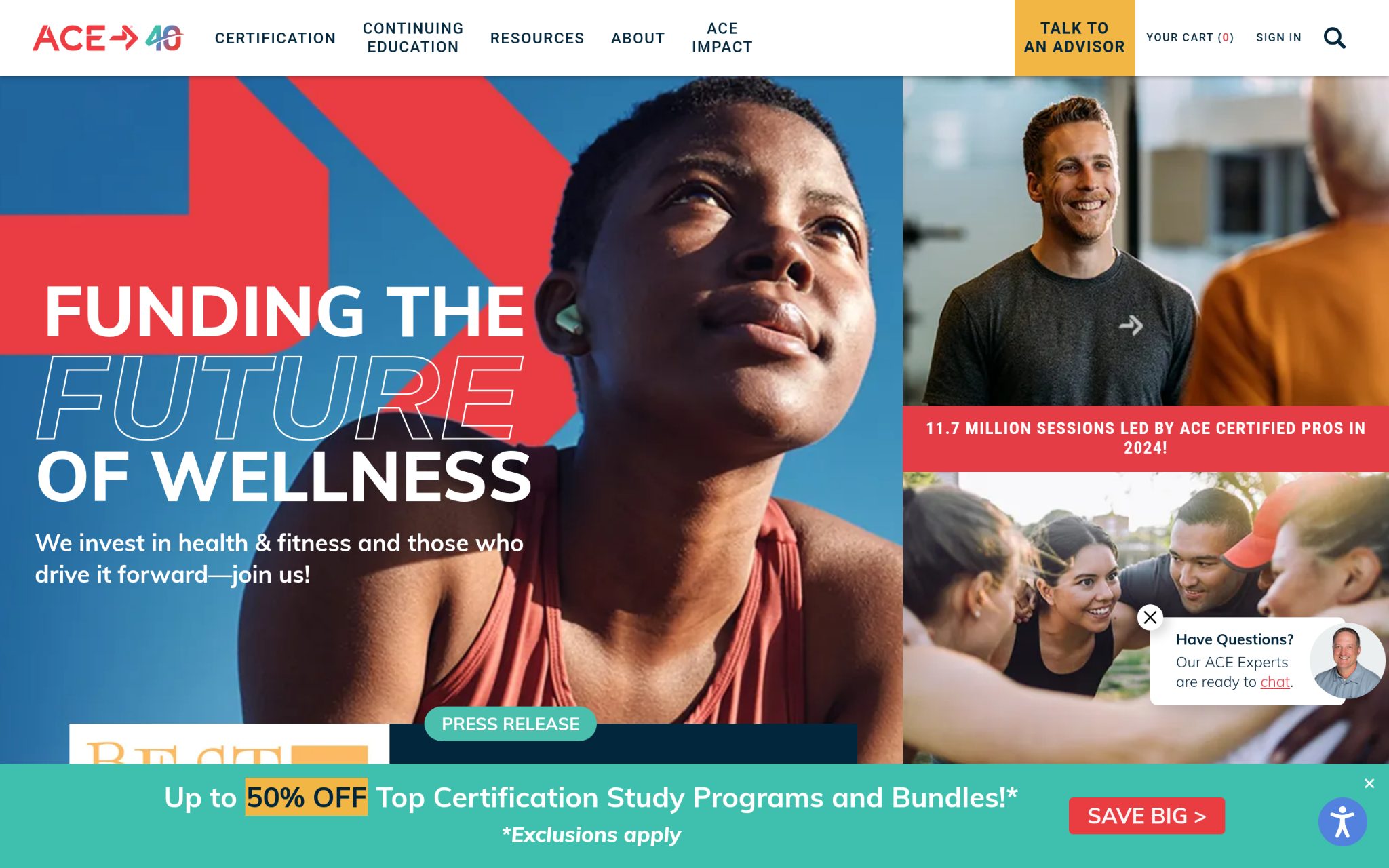
ACE has been running since 1985 as a nonprofit, which gives their approach a slightly different feel than for-profit competitors. They offer four NCCA-accredited certifications covering personal training, group fitness, health coaching, and medical exercise. Their continuing education catalog is broad, and their focus on community health advocacy sets them apart from programs built around certification volume alone. With 90,000 certified professionals worldwide, the credential has real reach across multiple fitness specialties, not just personal training.
Where Does ACE Win for Cheapest Personal Trainer Certifications?
ACE’s NCCA-accredited programs carry forty years of industry recognition and employer trust built across six continents. The nonprofit structure also signals that the focus stays on professional standards rather than purely on revenue, which matters when you’re building a career on a credential.
What the Reviews Show:
ACE earned recognition as a 2026 Best and Brightest Company to Work For, both in Southern California and nationally, along with a Nation’s Best and Brightest in Wellness win. Certified professionals point to the program’s depth and the strength of the ACE name when job searching. That kind of external validation isn’t common among certification providers at any price point.
- NSCA – Best for Research-Based Strength and Conditioning Certification
What NSCA Offers
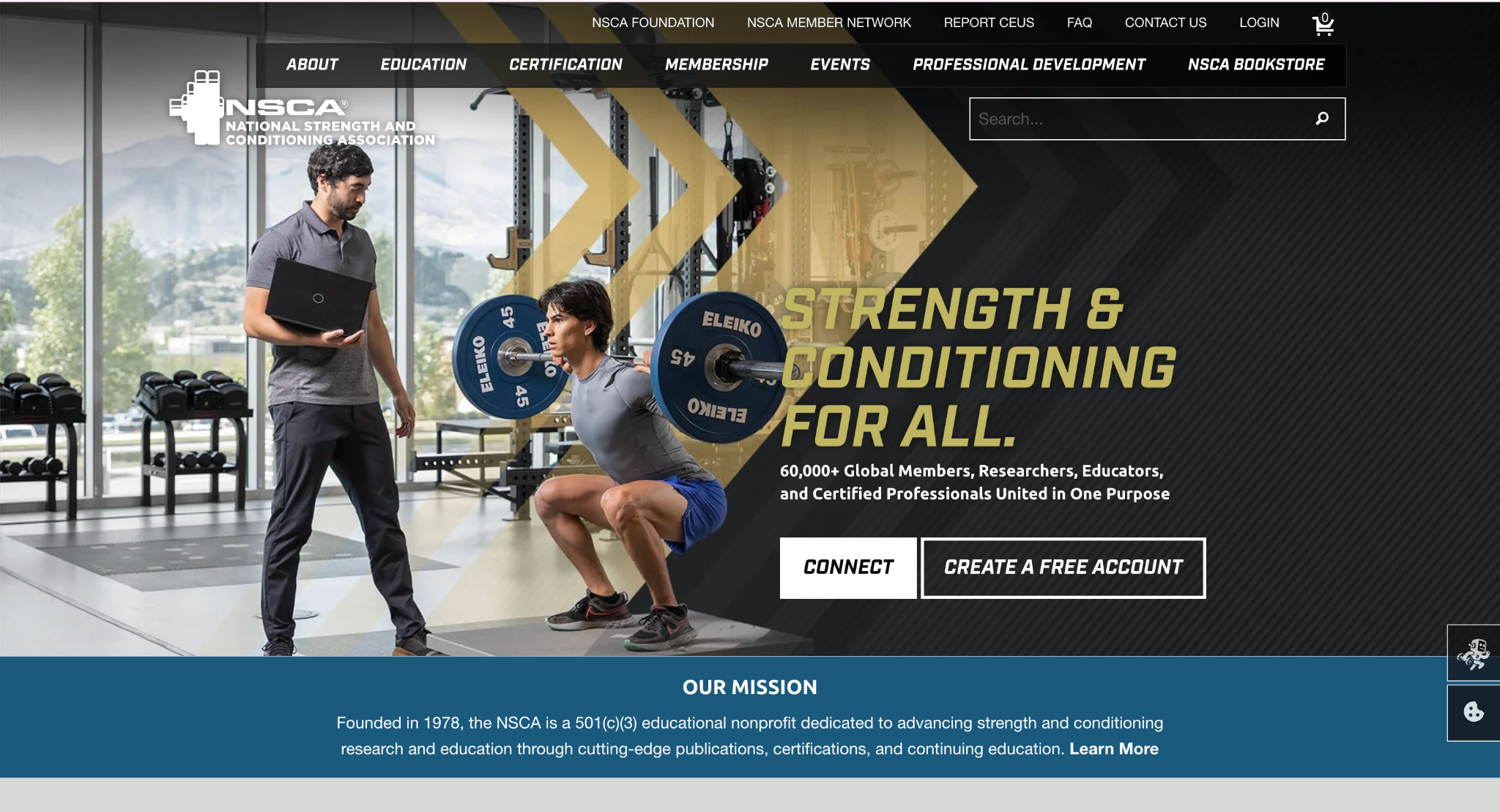
The NSCA has operated as a 501(c)(3) educational nonprofit since 1978, making it one of the oldest credentialing organizations in this space. They serve over 60,000 members globally, including certified coaches, trainers, educators, and sports scientists. Their research output is a standout feature, particularly the Journal of Strength and Conditioning Research, which ties certification to genuine academic rigor. The 25-plus professional development groups and ongoing education through NSCA TV make them a strong choice for trainers who want depth, not just a credential on their wall.
Where Does NSCA Win for Cheapest Personal Trainer Certifications?
The NSCA fills a specific gap for trainers who want a research-backed certification that carries weight in athletic and strength-focused settings, where employer expectations often go beyond standard personal training credentials. Their grounding in peer-reviewed science gives their certifications a level of professional credibility that few budget alternatives can match.
What the Reviews Show:
The NSCA’s reputation is built primarily through its research output and the professional community it serves, rather than through consumer review platforms. Their standing among sports scientists, coaches, and educators reflects respect earned over nearly five decades. That kind of institutional trust tends to speak louder than star ratings for trainers targeting performance-focused roles.
Evaluation Criteria and Research Approach
The process behind this ranking started with a broad sweep of the fitness certification space, pulling information from fitness education directories, review aggregators, and official certification websites. The goal was to build a starting list that captured the full range of budget-friendly options without pre-filtering based on brand familiarity alone.
Establishing Your Data Foundation
The initial longlist was built by pulling data from multiple sources simultaneously: fitness education directories, consumer review platforms, documented case studies from trainers who had completed these programs, and official websites. This cross-referencing approach helped surface programs that show up consistently in real career conversations, not just in paid advertising.
Narrowing the Field Through Review
Once the longlist was assembled, options without verifiable track records were removed. Each remaining program was evaluated based on review patterns across multiple platforms rather than relying on any single source. Programs where review data was thin, inconsistent, or predominantly promotional were deprioritized in favor of those with documented patterns of student outcomes and employer acceptance.
Confirming Accuracy Against Source Materials
Claims made on official certification websites were cross-checked against independent reviews and documented real-world results. Pricing structures, accreditation status, and stated benefits like CPR inclusion or job guarantees were each verified against multiple data points. Where discrepancies appeared between marketing language and verified outcomes, the more conservative interpretation was used.
The Authority Layer
Each program’s authority in the fitness education space was assessed through external signals including mentions in major publications, awards from recognized industry bodies, and any original research or published curriculum standards. Programs with consistent external recognition across multiple years scored higher on this dimension than those with a single award or a brief media mention.
Cheapest Personal Trainer Certifications Case Files
The final layer of review focused on program-specific evidence: dedicated certification pages with clear scope-of-practice information, verified student reviews that mentioned real job placement outcomes, and documented pass rate data where available. Programs that could demonstrate real-world impact on a trainer’s ability to find employment at recognized gym chains received priority over those with strong branding but limited employer acceptance evidence.
Finding the Right Cheapest Personal Trainer Certifications for Your Needs
Choosing a budget certification depends on where you want to work, how quickly you need to qualify, and how much additional cost you can absorb. Official provider details should guide your research, while videos can add context through cost comparisons, exam overviews, study-format breakdowns, and personal trainer certification comparisons based on different career goals. Here are the factors worth weighing carefully.
- Industry/Domain Experience: Look for programs that have been operating long enough to build a real track record. Newer programs may offer aggressive pricing but lack the employer relationships that matter when you’re job searching.
- Features and Services: Compare what’s actually included. Free CPR certification, study materials, and unlimited exam retakes can shift the total all-in cost significantly compared to programs that charge for each separately.
- Pricing Structure: Understand the full cost, not just the headline price. Factor in study guides, practice exams, CPR certification, and recertification costs over a two-year cycle before committing.
- Results Measurement: First-attempt exam pass rates and employer acceptance rates at major gym chains are the two clearest indicators of whether a program actually prepares you well.
- Industry Knowledge and Compliance: NCCA accreditation status is non-negotiable for most employers. Always confirm accreditation before enrolling, because not every budget certification meets that standard.
Final Words
Budget certifications vary more than most people expect, and the difference between the right pick and the wrong one comes down to accreditation status, hidden costs, and employer recognition. NCCA-accredited programs like IPTA, NASM, ACE, and NSCA each bring a different mix of affordability and professional credibility. As the fitness industry keeps growing, trainer credentials are only going to face more scrutiny from employers. Choosing carefully now means spending less time and money correcting the decision later.
Related reading
- 5 Best Personal Trainer Certifications in 2026
- Easiest Personal Trainer Certifications To Get in 2026
- 4 Cheapest CPT Certifications to Start Your Fitness Career
Published by
