How to Grow a Personal Training Business: Hormozi’s Four Channels and the Hour That Decides Everything

Gym Launch, the company Alex Hormozi founded in 2016, says it has worked with more than 6,000 gyms across 22 countries, created over a hundred gyms turning a million a year, and helped thousands of owners take home six figures. Whatever you make of the man, those are the numbers that explain why every trainer on your feed has an opinion about him.
Almost all of that attention goes to one half of the problem, which is how to get more people to enquire.
The other half decides your income, and nobody posts about it, because it is not interesting. It is what happens in the ninety minutes after somebody finally does.
The four channels, fairly stated
Hormozi’s framework for getting attention is deliberately unglamorous. There are four ways to reach anyone. Warm outreach, meaning contacting people who already know you. Content, meaning posting publicly for people who do not. Cold outreach, meaning contacting strangers directly. And paid advertising, meaning renting attention from a platform.
The order matters more than the list. Start warm. Exhaust the people who already know you before spending a penny on strangers, because the conversion rate per conversation is not close.
Most trainers do the opposite. They open Instagram, post four times a week to an audience made up largely of other trainers, and conclude after three months that marketing does not work for them.
Ten ways to actually generate enquiries
Here is the practical version for a trainer with a small list, no budget, and a diary that is already half full of sessions.
- Ask three current clients for a specific referral. Not “do you know anyone who needs a trainer,” which produces nothing, but “who do you train next to on Saturday mornings who keeps saying they want to start?”
- Reactivate everyone who stopped. Lapsed clients are the cheapest enquiries you will ever generate. They know your pricing, they know how you work, and most of them left for a reason that has since changed.
- Work your actual phone contacts individually. Not a broadcast message. People who already know what you do and have simply never been asked.
- Claim and finish your Google Business Profile. “Personal trainer near me” is a real search with real local intent, and a complete profile beats an abandoned one without you writing a single post.
- Ask for reviews consistently, at the moment a client does something they are proud of rather than months later when you need them.
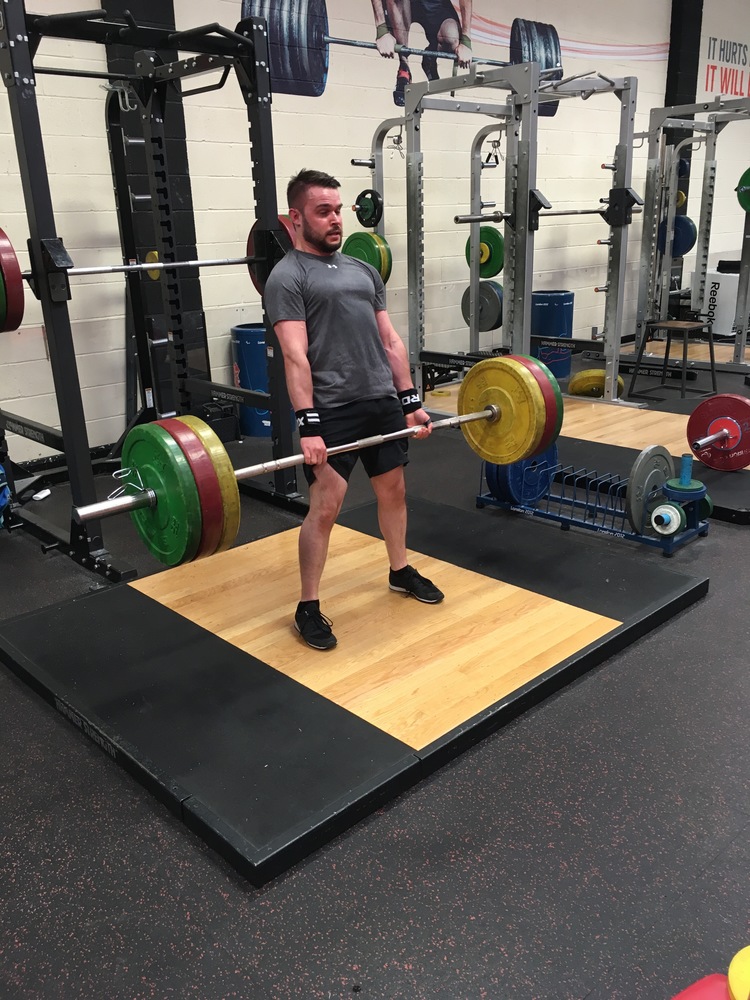
- Post the work instead of the theory. Thirty seconds of a real client’s third attempt at a deadlift will outperform another carousel about protein timing.
- Answer publicly the questions clients ask you privately. You already have the material. It is in your last ten sessions.
- Build two referral relationships locally. A physiotherapist, a sports massage therapist, a running club, a chiropractor. People who meet your future clients before you do.
- Approach local employers about small group sessions. Corporate work is unglamorous and it fills daytime hours you cannot otherwise sell.
- Run paid advertising last, tightly geo-fenced, with one specific offer. Not “get fit in 2026,” but a defined programme with a start date, a price, and a cap on numbers.
None of that is clever. All of it is available to you this week, and most trainers are doing two of the ten.
The half nobody posts about
Now the part that determines whether any of it turns into money.
In March 2011, Harvard Business Review published research by James Oldroyd, Kristina McElheran and David Elkington, who audited 2,241 US companies by submitting test enquiries and timing what happened next. Firms that made contact within an hour were nearly seven times more likely to qualify the lead than firms that waited just one hour longer, and more than sixty times more likely than firms that waited a day or more.
Read that again with a personal training enquiry in mind.
The message arrives at nine at night, after a photograph somebody did not like, a number on the scales, or a GP appointment that did not go the way they hoped. That is a peak, and peaks have a half-life. By Wednesday the feeling has receded, the intention has softened, and the trainer who replied at 9:14 on Monday evening has already booked them in for Saturday.
You did not lose that client on price, programming, or qualifications. You lost them on Tuesday.
Why trainers are set up to lose this
The frustrating part is that this is not a discipline problem, and treating it as one is why it never gets fixed.
You are on the gym floor for most of the hours enquiries arrive. You are mid-session, or driving between clients, or asleep because your first client is at six. The enquiry lands in exactly the window where you cannot answer it, and by the time you can, you have four other messages and a programme to write.
So it has to be built rather than remembered. Four things cover most of it. Something that answers immediately when you cannot, even if it is a simple automatic reply that sets an expectation and asks one qualifying question. A booking link that kills the back and forth about times. A two-message follow-up sequence for people who go quiet, because most people go quiet once and come back when nudged. And a note of where every enquiry came from, so you find out which of the ten things above is actually working.
That is an afternoon of setup, and it is worth more than another three months of posting.
Everybody is in the same boat
It is worth saying plainly, because trainers often assume their industry is uniquely difficult. It is not.
A painting contractor loses the job because the homeowner rang three painters and one picked up. A roofer loses it the same way. Dentists, physiotherapists, driving instructors, wedding photographers, accountants and law firms are all running the identical machine: generate an enquiry, respond fast enough to matter, qualify it, book it, convert it, and keep a record of which source produced it.
The version written for law firms tends to be the most developed, because the arithmetic at that end is brutal. A single family law matter is worth thousands, so a call that goes to voicemail and gets returned tomorrow is not a small loss, and firms document their intake in a way most gyms never bother with. Reading how another industry handles the same problem is usually more useful than reading the tenth article about your own.
What actually gets harder from here
The trainers who grow over the next few years will not be the ones posting the most. Attention is getting more expensive and less reliable, and the four channels are available to everyone with a phone and a morning free.
The gap will sit in what happens after somebody puts their hand up. It is unglamorous, it is invisible from the outside, and unlike the algorithm, it is almost entirely within your control.
Published by
