Building Fitness After 40: Why It’s Not Too Late to Start Exercising (And Could be the Perfect Time)

Building fitness after 40 is a topic that many people seem to struggle with, so I’m going to help you navigate the waters.
I’ll help you understand what’s happening in your body. I’ll also give you a framework of how to train and recover. I’ll explain where you can push hard, and where you need to pull back. I’ll outline supplementation and recovery strategies that I use to maintain fitness and vitality in my 40s.
None of this is rocket science, but the truth is, if you want to build fitness after 40, you can’t do the same stupid stuff you did in your late teens and twenties.
The Hoyles Fitness guide to building fitness after 40…
In your 40s, it’s not the beginning of the decline. Instead, it’s the end of recklessness. Your body stops giving away the free passes and starts punishing your shitty choices.
Up to 40, people often get away with:
- Poor sleep
- Unbalanced training
- Stress
- Excess Drinking
- Poor food choices
Post-40, your body starts to punish these choices.
I remember in my late teens and twenties, I could play football on a Saturday, start drinking after the game, go to a club and be out until 3 in the morning, wake up without a hangover and play again on Sunday morning without issue.
Now the thought of that makes me want to weep!
Hangovers hit harder now. A lack of sleep doesn’t go unpunished. If my training is off, injuries and niggles start to show up. If my diet is poor for a few days, inflammation kicks in, and my recovery is impacted.
I don’t see it as a weakness; I see it as feedback.
Building fitness after 40 is about precision, not punishment. It’s about listening to your body and understanding what it needs. In my twenties, my body worked despite my shitty training, excess drinking and inconsistent sleep habits.
Now, I don’t have those luxuries. I bet you don’t either.
Training Sensibly In Your Forties
Your 40s should be the end of your vanity training and the start of your training for your health. Don’t worry, though – if you get this right, the vanity element takes care of itself. We’re training to make you feel better, but looking better is a nice by-product of this process.
To make the training section make more sense, I’m going to break it down into resistance training and cardio training.
Resistance Training Past 40
In your 40s, you’ve got to start thinking about muscle building and preservation. Strength isn’t the priority now. In fact, I do almost zero resistance training with a pure strength goal in mind. The risk-reward ratio just doesn’t make sense to me. The idea is to build fitness after 40 – not just strength.
I split my resistance training around a couple of main elements…
- High volume/density to preserve muscle x 2 per week
- Explosive movements to presever power x 2 per week
I like full-body training with high volume or high density. I’ll mix up volume or density depending on how I’m feeling. That means you keep the weights to medium-high (the kind you fail at 8-10 reps with), but you perform a high number of sets (I like 4-5). You also keep the rest periods shorter (45-60 seconds).
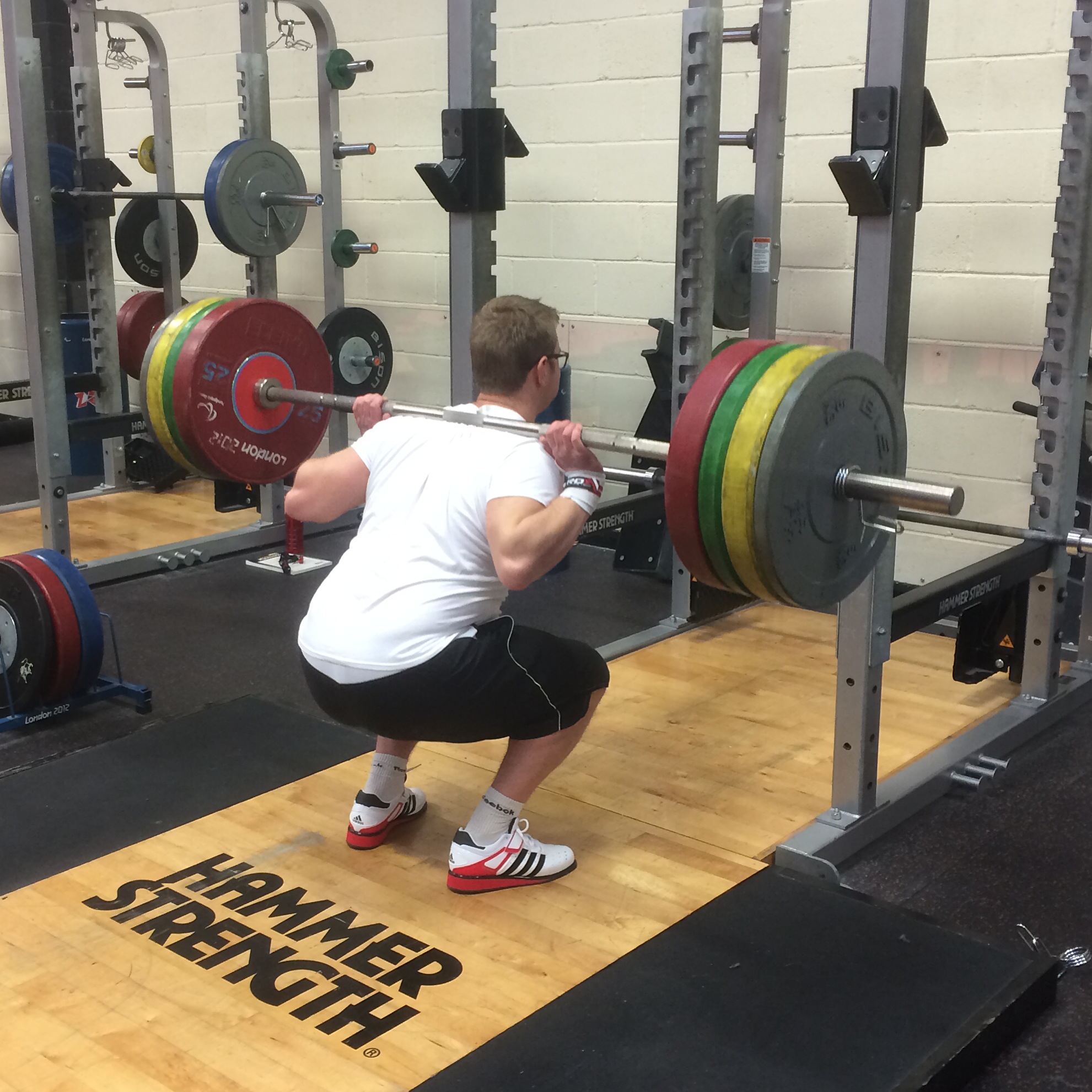
Research suggests that shorter rest periods are advantageous when it comes to muscle building. In a review of the research published in 2009, scientists suggested that… ‘When the training goal is muscular hypertrophy, the combination of moderate-intensity sets with short rest intervals of 30-60 seconds might be most effective due to greater acute levels of growth hormone during such workouts.‘
It’s an approach that has worked for me. The accumulated fatigue also naturally reduces the amount of weight you can lift, which lowers the injury risk. If you want to build fitness after 40, you’ll have to keep injury prevention at the front and centre of your thinking.
Before we go any further, I want to explain the difference between volume and density. Volume is the total amount of work done in a session, either by the number of sets, reps or duration. Density is the amount of work done in a shorter period of time.
So for example, 5 sets of 10 with 45-second rest periods would be high density, whereas 5 sets of 15 with 120-second rest periods would be high volume.
My power training is more explosive movements, performed with medium weight at a high intensity. I recently wrote about my power training in detail, so if you want more information on power training past 40, read the article below…
I generally stick to workouts that are 45-60 minutes long, whether that’s my power training or my density work.
Cardio Training Past 40
When you get to 40, your cardio training has to be more targeted if you want to maximise benefits.
Whilst there’s a huge value in a lot of zone 2 work, the reality is it’s a huge time commitment. With that in mind, I tend to stick to a single zone 2 workout per week, lasting 45-60 minutes. My go-to is a BikeErg, because I find it easier to control my heart rate than I would if I were running.
The rest of my cardio is shorter, but much higher intensity.
I saw Rhonda Patrick discuss the Norwegian 4 x 4 workout, which helps to reverse heart ageing significantly. If you haven’t heard of it, here’s a short video explaining the protocol…
Alongside the medical research suggesting the effectiveness of the approach, the research shows that the workout protocol also helps to improve cardiovascular fitness more effectively than steady-state cardio. There’s also a reduced injury risk when the training is shorter, especially when it comes to activities such as running.
I add the cardiovascular training in a couple of times per week.
Accessory Exercises
You need to think injury prevention with your accessories, so think about areas that you suffer with and make allowances. I have a go-to set of exercises that I use as part of my injury prevention strategy…
Back Extension Holds – 3 x 30 seconds
I suffered an L4/L5 disc bulge in 2024, and it was AGONY. I now use back extension holds to help protect my lower back, and prevent re-injury.
Spanish Squats – 3 x 15
I use Spanish squats to help preserve my knees. I’ve (thankfully) never suffered any serious knee issues, and I intend to keep it that way by adding these in.
Incline Reverse Fly – 3 x 15
A big problem area for a lot of people is the rear delts. These help to rebalance shoulder strength and prevent injuries to the shoulder girdle.
Seated Calf Raise – 4 x failure per side
My soleus muscle has been a problem for a long time, and if I don’t stay on top of the strength training for it, running is nigh on impossible. These are a big feature of my training – I do them weekly without fail.
These are the accessory exercises I do for my body, but you’ll have your own that will help you stay on top of your own ailments.
Recovery – The 360 degree approach
The bedrock of all recovery is sleep. You’ve heard it a thousand times, and you’ll hear it a thousand times more. It’s always been true, and it’ll remain true.
You can tweak your nutrition how you like, and you can supplement how you like. It won’t change the fact that if you want to rest and recover properly, you’ll need to move sleep towards the top of your priority list. The rewards are really worth it.
So many people I know in their 40s and beyond constantly tell me how tired they are, which shows me they aren’t prioritising quality sleep. You can’t expect to train well and feel good if your sleep habits are down the toilet.
We often blame caffeine for sleep issues, but alcohol is a far bigger issue. A heavy night of drinking will kill your sleep far quicker than a couple of afternoon coffees, that’s for sure. If you don’t believe me, check your watch sleep information after a few drinks – you’ll be amazed at the impact!
Sauna for recovery
I love sauna, and I want to have one installed in my garden. If I could have a sauna daily, I would!
Traditional Finnish sauna helps to improve circulation, enhance muscle recovery, and improve general cardiovascular health. It also changes hormonal profiles, enhancing growth hormone release and preserving muscle mass. Research has shown that regular sauna use also protects against neurodegenerative disease.
The reduction in all-cause mortality from sauna use is statistically significant, and that’s reason enough to use them.
Rarely in life do we come across something so passive and easy, with so many proven benefits. There’s almost no effort involved in a sauna, you simply sit down and let the benefits unfold. As long as you stay hydrated throughout your session, all you need do is show up.
Nutrition Changes
You can’t get away with as many crappy decisions around food when you get older.
When I was younger, I could eat pretty much whatever I wanted, and it wouldn’t cause much issue. Nowadays, I know that if I eat foods such as pastry, I suffer from terrible heartburn. If I overindulge on really fatty foods, I’ll be struggling with digestive discomfort for hours afterwards.
Too much crap in my diet makes me sluggish, inflamed and generally feeling subpar.
That’s not to say my diet is 100% clean – far from it. What I do ensure is that indulgences are earned, and they’re occasional. I generally eat a diet that is cooked from scratch, minimal processing of ingredients and often based around high protein and fibre foodstuffs. I’m not perfect by any stretch, but I’m not on several weekly takeaways.
A Note on Fasting
I’ve done a couple of 72-hour fasts before (read my diary on one here), and I find them really helpful for getting rid of inflammation, aches, pains and general niggles. Fasting isn’t easy, but it’s very effective.
There are metabolic health reasons for fasting, there’s autophagy, and there are cancer-prevention reasons for it. Whether or not they’re all effective, who knows? What I do know is that, as difficult as they are, when I’ve done them, I feel significantly better.
When you’re older, you’re probably (hopefully, anyway) more mentally mature and resilient. That’ll help you deal with the hunger better, and enable you to last through the fasting period. I’d suggest 72 hours to enjoy most of the benefits.
Supplementation
I’ve attached more importance to supplementation as I’ve gotten older, because it’s not always easy to hit all your requirements through your diet.
The supplement stack I take is as follows…
- Creatine, for energy and brain health
- Multivitamin for general mineral intake
- Zinc and magnesium for immunity and sleep health
- Vitamin D because I live in the north of England!
I don’t take a pre-workout, because I don’t think they do much for me personally. I’m also of the belief that if you need stimulation to train, you’re probably not recovered enough in the first place.
The other supplement I’ve used in the past but tend to avoid now is protein. It’s not because I don’t think protein is worth it; it’s just because I already consume a lot of protein in my diet. If I were vegetarian or vegan then it’d be an essential supplement for me.
Building Fitness After 40 – The Snapshot
There’s a tendency to overcomplicate training generally, but even more so after 40. To make it simple, here’s the snapshot of what you need to do in order to build fitness after 40…
- Train to build and preserve muscle – prioritise this over pure strength
- Follow a whole body workout program with each workout
- Add a couple of power workouts in per week
- Focus on two types of cardio – long and slow, and short and fast. Ignore the middle
- Rest and recover well – reduce alcohol and crap food intake, prioritise sleep
- Take supplements
Get these in order, and you’ll thrive in your forties and beyond!
If you want to follow me and my life in more detail, come and catch me on Instagram!
Published by
