10 Reasons to Train for Power After 40 – And How to do it!

Train for power after 40? Yes. You must.
If you’re over 40, one of the most important shifts you should make in your training is to include power work. It’s power, not muscle, that depletes first. Losing muscle power has a series of health and longevity implications, rather than just vanity.
Here are 10 reasons to train for power after 40, and a guide on how to do it…
What is Power?
There’s a confusion between power and strength, so I’ll outline a difference at the start so we’re all on the same page.
- Strength is the ability to move a heavy load, such as a heavy squat or deadlift.
- Power is the ability to move a load quickly, such as in Olympic weightlifting, jumping, or throwing.
The training methods for developing each are different, so in this article, we’re going to focus solely on how to develop power, not strength.
Reasons You Need to Train for Power After 40
I can’t stress this enough – post 40, we’re not power training for vanity. We’re power training for health, longevity and functional ageing. We’re training to prevent falls, maintain functional capacity into old age, and retain independence. Vanity is just a nice secondary benefit.
You might be thinking that 40 is too young to be thinking about those things, but the reality is the sooner you start looking after your capabilities, the better.
The 10 reasons to train for power post 40…
Fast-twitch muscle fibres atrophy the quickest
After ~30–35, Type II (fast-twitch) muscle fibres shrink and die off at 2–3× the rate of slow-twitch fibres. These are the type of muscle fibres that allow us to perform fast or heavy movements. Power training (plyometrics, Olympic lift variations, medicine-ball work, sprinting) is the only stimulus that maintains or regrows them.
The evidence from the claims comes from well-established research, with this study showing as far back as 1995 that this was well understood.
The good news is that we can reverse this trend with strength and power training past 40. In a study from 2025, the researchers concluded that ‘The evidence suggests that multimodal interventions, including strength training, can effectively maintain or improve physical function in ageing adults.’
Power training after 40 prevents falls and fractures
Reaction time and the ability to generate force quickly drop ~2–4% per year after 40. Power training improves rate of force development (RFD) by 15–30% in 8–12 weeks, which is the #1 predictor of avoiding falls in older adults (studies on older adults show 20–50% reduction in fall risk).
In English, what this means is that we suffer loss of balance at any age, but the reason younger people don’t fall is frequently is because they have the ability to generate force quickly, which regains balance and stability. So falling isn’t always a balance issue, it’s a fast recruitment of strength issue.
A research paper titled ‘Effects of Power Training on Functional Capacity Related to Fall Risk in Older Adults: A Systematic Review and Meta-analysis‘ was published in 2023, and the scientists said…
In conclusion, power training increases functional capacity related to fall risk further than other types of exercise in older adults.
Power training preserves bone density better than slow strength training
High-velocity loading creates greater peak forces and strain rates on bone. These creates a stronger osteogenic (bone-building) signal to the body, making it increase the production of new bone cells. Research shows jump training and power-based lifts increase hip and spine bone mineral density more than traditional resistance training in postmenopausal women and men over 50.
What’s also interesting is the dose-response relationship. With power training, it appears that more is better (obviously, within recovery capabilities). In the research paper ‘The effects of high velocity resistance training on bone mineral density in older adults: A systematic review‘, the following conclusions were drawn…
High High-velocity resistance training plays a role in increasing bone mineral density of the lumbar spine, femoral neck, and total hip. Doses of higher intensity exercise performed ?2 sessions per week will yield the most skeletal benefits, and if exercise is stopped for >6 months, benefits achieved may be lost.
This indicates that power training isn’t just an intervention, designed to solve a problem in the short term – it’s a lifestyle.
Power training reverses sarcopenia faster
Sarcopenia is the age-related loss of muscle function. It’s a combination of reduction of muscle size, power and strength, usually brought on by a lack of movement. Sarcopenia doesn’t just impact the muscles – a reduction in muscle strength and capability limits cardiovascualr output, and weakens the connective tissues.
Collectively, these lead to a reduction in functional capacity, injury resistance and general health.
A research paper titled Progressive strength training can reverse sarcopenia stage in middle-aged and older adults regardless of their genetic profile offers some hope, though. It shows that progressive strength training reverses muscle loss, reducing the impact of ageing on the musculoskeletal system,
Power training post 40 improves insulin sensitivity and metabolic health
One of the most common, yet entirely preventable, metabolic diseases in the over-40s is type 2 diabetes. Power training can really help to prevent this. We know that high-intensity, explosive efforts recruit more muscle fibres and create a greater ‘metabolic disturbance’, leading to better glucose disposal and lower visceral fat compared to rep-for-rep with slow lifting.
Research into managing diabetes from 2006 shows that strength training is very effective, not just because it helps to control insulin levels, but also the knock-on effects of exercise. The conclusion from the study was…
‘Strength training improved muscle quality and whole-body insulin sensitivity. Decreased inflammation and increased adiponectin levels were related with improved metabolic control.‘
Collectively, it means that exercise isn’t just good for managing diabetes – it could even be optimal.
Strength training maintains testosterone and growth hormone
Strength training produces some of the largest acute hormonal responses in men and women over 40. The effects are easily measurable and can vary depending on the type of training, as seen in a study titled ‘Effects of heavy-resistance training on hormonal response patterns in younger vs. older men‘. The researchers concluded…
‘With training, the older group demonstrated a significant increase in total testosterone in response to exercise stress, along with significant decreases in resting cortisol.’
Showing that regardless of age, there’s a hormonal upside to resistance training.
Power training keeps you functionally young
Everyday tasks (catching yourself on stairs, getting out of a chair fast, carrying groceries + a toddler) are power-dependent, not strength-dependent. If you lose power, you feel ‘old’ even if you’re still fairly strong. This is a key measure of how power training makes a fundamental difference to your quality of life.
There’s also a predictive element to how power impacts your physical capabilities. In a 2021 study titled Rate of Force Development as a Predictor of Mobility in Community-dwelling Older Adults, researchers concluded that…
‘Compared to common assessments of muscular performance, such as handgrip strength and chair rise performance, Plantar Flexors Rate of Force Development was a greater predictor of mobility in older adults.‘
In essence, this means that you can use the ability to generate force from the floor as a more accurate marker of how functionally capable an individual is, rather than just relying on static measures such as strength.
Resistance training reduces injury risk
Here’s a little equation for you… Stronger tendons + faster force production = fewer strains and tears.
Stronger connective tissues (ligaments and tendons) are a by-product of strength and power training. By incorporating these modalities into your training, you build the injury resistance required to offset tissue quality reduction.
Research published in 2018 titled ‘Strength training as superior, dose-dependent and safe prevention of acute and overuse sports injuries: a systematic review, qualitative analysis and meta-analysis‘ concluded…
‘Increasing strength training volume and intensity were associated with sports injury risk reduction.‘
This is interesting because it shows that power training doesn’t just make us more athletic in general, but also reduces the risk of injury when playing other sports. It suggests that power training has a medicinal effect as a preventative measure.
Power training protects the brain and mood
There’s the adage, ‘healthy body, healthy mind’. It rings true time and again in the research. In a paper published in 2024 titled ‘Strength training has antidepressant effects in people with depression or depressive symptoms but no other severe diseases: A systematic review with meta-analysis‘, the researchers found that strength training helps to ease depression and depressive symptoms.
WIth our pyschological state governing so many of our other healthful behaviours, it’s important that we protect it. Think of it as a lead domino, so to speak. Get your head healthy, and your body will follow.
Power training is time-efficient
You can get a massive training effect in 20-40 minutes, 2–3× per week, with moves like kettlebell swings, box jumps, sledge pushes, and med-ball slams. You don’t need long breaks between sets, and you don’t need to lift heavy weights eccentrically. This means your recovery time is short.
Unlike bodybuilding style training, where you’re training all the different muscles from different angles, and with a variety of sets and rep ranges, power training is movement-based. You’re performing bigger, multi-joint exercises that get the work done in less time. It can cut a workout down, giving you more time to yourself.
If you’re doing power training for longer than an hour, I’d question whether or not you’re power training at all!
How I Train for Power After 40
The reality of training in your 40s is that your injury risk is higher. In other words, your body’s ability to tolerate shitty technique and exercise selection diminishes. That means your warm up and exercise selections have to be more sensible.
Warming Up for Power Workouts
I always start with a 5-minute full-body cardio warm-up at a low intensity. Typically, I’ll use a rowing machine or an air bike. These get everything moving, as opposed to a skierg (which has an upper body bias) or a regular exercise bike (which focuses on the lower body only).
Once I’m warm, I’ll perform the movements I’m about to do with light weights, or even body weight. This serves me three purposes…
- Allows me to practice the movement, so I can get a feel for the pattern
- Neurally sets me up for the exercise
- Provides my body with a graded exposure to the full thing, which also provides me with mobility prep
I might do this for 2-5 reps, depending on the exercise.
I don’t stretch as part of a warm-up, regardless of the workout. I always stretch afterwards.
Power Workout Exercise Selection
When I’m training for power, I’m doing so for general health and fitness. This is opposed to more specific power training for sports such as throwing, jumping, sprinting or weightlifting sports.
It means I incorporate power exercises from different disciplines in my workouts.
Here are a few examples I use…
Lower Body Power Exercises
Dumbbell Jump Squats
I like these because they’re very simple, have a lot of sporting crossover, don’t use much equipment and offer a lot of bang for your buck. They’re excellent for most people, just avoid them if you’re carrying a lower-body injury.
Weighted Prowler Push
A great combination of resistance training and sprinting, these are another exercise with big sporting crossover. There’s very little in the way of technique to learn, and you can load-adjust depending on your goals and power level. You need the right equipment and space, obviously.
Upper Body Power Exercises
Prowler TRX Rows
If you’ve got the space and equipment, this is one of my favourite upper-body power exercises. It’s a great back developer, and the fact that you have to push the prowler back to its start position means you incorporate leg work as well.
Dumbbell Power Snatches
Another exercise requiring very little equipment, but offering great returns is the dumbbell power snatch. As long as you brace the core at the bottom of the movement to protect your back, these are safe. Explode up, extend overhead and lift a weight that is challenging, but allows you to perform 5-8 reps per side.
Plyometric Push Ups
I love these and perform them almost every time I do a power workout. They’re pretty humbling when you’re new to them, but I think they’re more transferable to sport than a standard bench press for most people. Just make sure you control the descent – you don’t want to break your fall with your face.
Olympic Weightlifting Variations
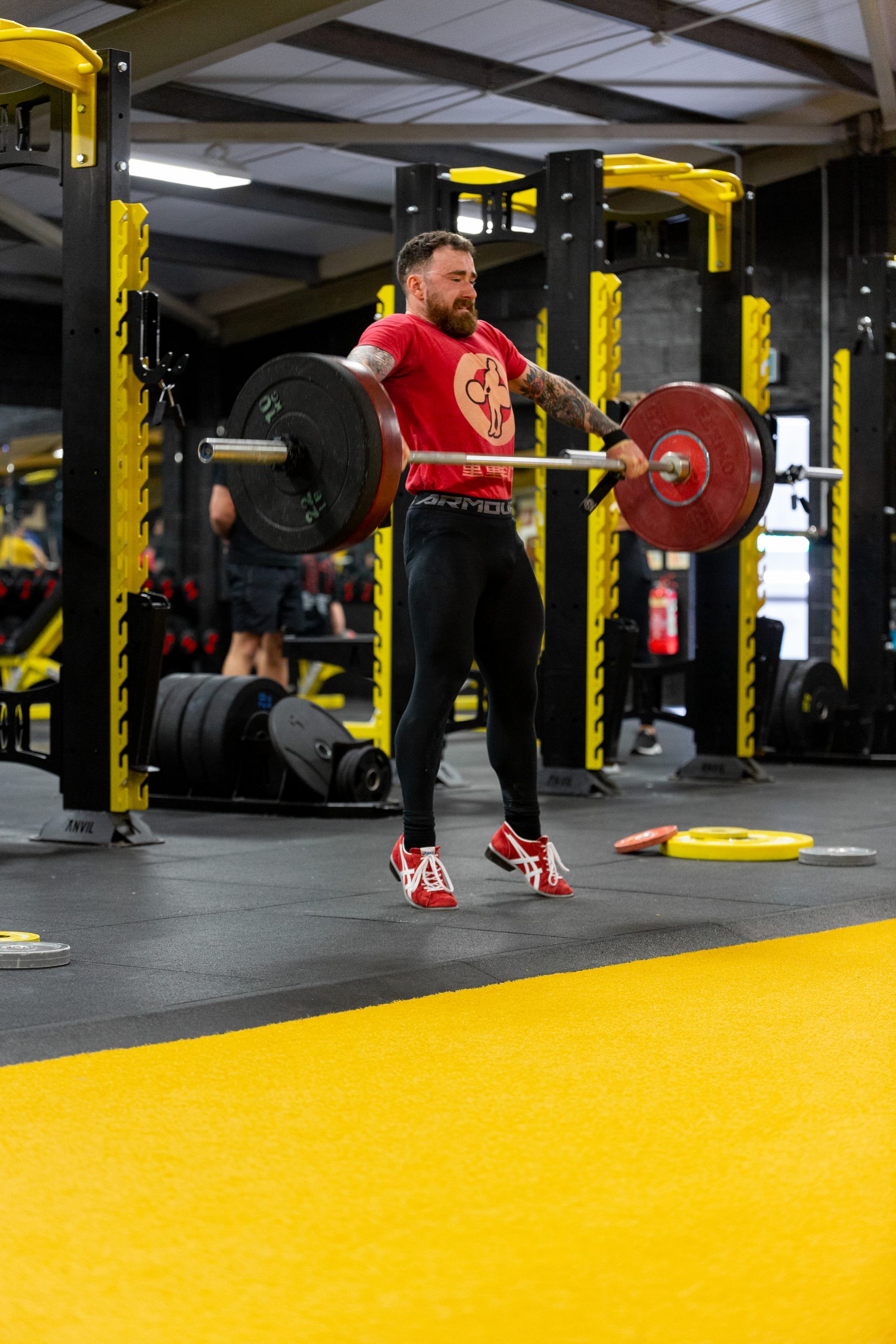
The Olympic weightlifting exercises are the snatch and the clean and jerk. They’re superb power exercises, but they do need some coaching in order to execute them well.
Even if you’re not interested in being a weightlifter, you can still use the exercises to train for power after 40 – just make sure you learn correct technique first. In the next few videos, I’ll show you some of the variations I use for my power training.
Power Cleans
I like to use this variation of the clean because it’s less technical than the full clean, whilst still offering many of the benefits. It’s an excellent way of developing power in the posterior chain.
Hang Snatches
The hang snatch is less technical than the full snatch, but still requires the explosive power of the back, legs and shoulders. It’s more specialist than other exercises, but worth the effort.
Power Clean into Split Jerks
This combo is a true all-body power movement. There’s a lot of technical work in this lift, so only take it on if you’re confident in your ability to execute it well. Lift appropriate weights, so nothing that’ll see you maxxing out.
Heavy Thrusters
Thrusters aren’t an Olympic lift, but they can be employed in a variety of different ways, so they’ve made the list. Some people use them for high-rep conditioning work, for example. They also work for power training if you go heavy enough, though, like in this example.
How Heavy Should I Lift?
With power training your goal is to move weight quickly. In order to move a weight quickly, it can’t be too heavy. You want to lift anything between 40 and 60% of your 1 rep max, for 4 or 5 sets of 2-5 reps. Remember what I said about injury risk earlier. When you train for power after 40, you MUST consider safety first.
You also need to spread the work around the body. This isn’t bodybuilding, so you’re not trying to purely fatigue the muscle to make it bigger. You’re looking for the muscle to be rested and recovered before performing another set. If you’ve performed a leg exercise, follow it up with an upper body exercise for example.
Aim for 90 seconds to 3-minute rest periods to ensure you’re recovered and rested between sets.
A couple of power workouts per week, around 45 minutes per session are ideal.
Train for Power After 40 – Sample Power Workout
Here’s an example of the kind of power workout I do when I’m in the gym…
- Warm Up: 5-Minute Row or AirBike
- 6 x 25m Prowler Sprints
- 6 x 25m TRX Prowler Pulls
- 4 x 8 20 Inch Box Jumps
- 4 x 8 Plyo Push Ups
- 5 x 5 Power Cleans
This lasts around 45 minutes, allowing for the rest periods I need. You might look at the session and think it looks easy, but it really isn’t. The aim when you train for power after 40 is that you maximise every rep. You want to work hard throughout the session, so you’re leaving nothing in the tank at the end of it.
Train for Power After 40 – Final Thoughts
When you train for power after 40, you don’t just improve your fitness, you improve your health, your state of mind and your vitality. It’s the kind of training you simply can’t ignore.
You can spend your early years training for vanity, but once you hit 40, you’ve got to train sensibly, and that means getting those power workouts in. Get them done, and thank me later. You’ll look, feel and perform 10 years younger.
If you want to follow me and my life in more detail, come and catch me on Instagram!
Published by

One thought on “10 Reasons to Train for Power After 40 – And How to do it!”